
Early Allergen Introduction for Babies: A Guide to Preventing Food Allergies
For many years, parents were told to avoid giving babies food allergens like peanut products or eggs. Today, the medical guidelines have changed. Pediatricians and pediatric allergists now say you should introduce common food allergens to babies between 4-6 months of age, and continue to give them regularly. This approach can dramatically reduce the risk of your baby developing food allergies.
At-a-Glance: Early Allergen Introduction for Babies
- Medical guidelines have reversed based on solid research. Doctors now recommend introducing the top 9 allergens (peanut products, eggs, milk, tree nut products, soy, wheat, fish, shellfish and sesame) between 4-6 months of age. Studies show an 81% reduction in food allergy risk with early introduction.
- Early introduction works by teaching your baby’s immune system to accept foods as safe rather than harmful. A baby’s first first three years of life are a critical window when introducing allergens. It can help your baby’s body build tolerance to food allergens.
- Preparation methods matter for safety and effectiveness. Peanut should be thinned into a butter or given as a puff (never give whole peanut to a baby). Fully cook and mash eggs and use tahini instead of whole sesame seeds. Introduce one new allergen every 2-3 days while monitoring for reactions.
- Maintenance is just as important as introduction. Offer each allergenic food 2-3 times weekly after successful introduction to help maintain immune tolerance. Studies show consistent exposure increases the protective benefits.
- High-risk babies with severe eczema or existing food allergies need early introduction most. These babies should start as early as 4 months when developmentally ready. They may benefit most from early allergen exposure. It should be done under medical guidance.
- If reactions occur, continue introducing other allergens. One allergy doesn’t predict others. Work with your child’s doctor to ensure safety for your child while introducing other food allergens.
Why Early Introduction Prevents Food Allergies
Your baby’s immune system is learning every day during the first three years of life. This is a critical window when your baby’s body learns what to accept and what to fight off, including foods.
When you introduce allergenic foods early, you give your baby’s immune system a chance to learn that these foods are safe. The body builds tolerance. It learns to accept the food instead of treating it like a threat. This immune tolerance is key to preventing food allergies.
The research supporting early food introduction of allergenic foods
These studies below show that introducing allergenic foods early and keeping them in your baby’s diet can significantly lower the chance of developing food allergies.
- LEAP study (2015) for peanut allergy prevention. Babies who ate peanut products regularly starting at 4-11 months were 81% less likely to develop peanut allergies by age 5.
- LEAP-ON study (2016) for long-term protection. In children who ate peanut products at 4-6 months of age, then stopped for a year, 95% of them remained allergy-free. This shows early introduction can develop lasting protection.
- PETIT study (2017) for egg allergy prevention. Babies with eczema who ate cooked egg starting at 6 months were less likely to develop egg allergies.
- EAT study (2016) for multiple allergen introduction. Babies who ate six allergenic foods (peanut, egg, milk, sesame, wheat, fish) starting at 3 months had 67% fewer food allergies by age 3.
Current guidelines for introducing allergens to babies
The American Academy of Pediatrics (AAP) and allergists recommend introducing allergenic foods starting around 4 to 6 months of age for all babies. This timing gives your baby’s immune system the best chance to build tolerance and learn that these foods are safe.
Early allergen introduction works for all babies, not just those at high risk for food allergies. However, for babies with severe eczema or an existing food allergy, starting as early as 4 months is especially important, but only if your baby is developmentally ready to eat solid foods.

Step-by-Step Guide: How to Introduce Allergenic Foods to Babies
How to start introducing food allergens to your baby? Here’s a step-by-step guide:
Step 1: Make sure your baby is developmentally ready
Start when your baby shows these signs (usually at 4-6 months):
- Good head and neck control
- Sits with support
- Can grab food and bring it to their mouth
- Swallows instead of pushing food out with their tongue
Only introduce new foods when your baby is healthy. If your baby is sick or teething, wait to introduce new allergenic foods. It could be harder to spot a true allergic reaction.
Step 2: Start with simple first foods
Begin with soft, pureed foods like:
- Infant cereal (oatmeal)
- Mashed banana, avocado, or sweet potato
- Applesauce
- Pureed carrots, peas, or meats
Once your baby enjoys a few foods, move on to allergens.
Step 3: Know which allergens to introduce
Introduce these nine common food allergens early and keep them in your baby’s diet regularly:
- Peanut products (peanut butter, peanut powder, peanut puffs)
- Eggs
- Cow’s milk and goat’s milk products (yogurt, cheese)
- Tree nuts (almonds, walnuts, cashews)
- Soy
- Wheat
- Fish
- Shellfish
- Sesame
Step 4: Prepare allergens safely to prevent choking
Peanuts and tree nuts: never give whole nuts or thick nut butter as they are choking hazards. Use smooth peanut butter thinned with water, breast milk, formula, or pureed foods. It should be runny, not sticky. You can also use nut powders mixed into cereal.
Eggs: serve well-cooked eggs (scrambled or hard-boiled), mashed or finely chopped.
Milk: for babies without known milk allergies, try plain whole yogurt, cheese, or milk baked into foods. Don’t give straight cow’s milk to drink until after the child is 1 year old.
Soy: use soft tofu, soy yogurt, or soy flour in baked goods. Avoid salty soy sauce.
Wheat: introduce through baby cereals, soft bread, or baked goods. Make sure foods are soft and easy to swallow.
Fish and shellfish: serve fully cooked, boneless, and mashed or flaked.
Sesame: use tahini (sesame paste) thinned with water, breast milk, or formula. Whole seeds are choking hazards.
Step 5: Introduce one new allergen at a time
Add a new allergenic food every few days. This helps you identify which food caused a reaction if one occurs.
Step 6: Keep allergens in your baby’s diet (maintenance)
Introducing once isn’t enough. Keep allergenic foods in your baby’s diet 2-3 times per week after safe introduction. This helps the immune system remember the food is safe.
Tips for maintenance:
- Mix small amounts into familiar meals (nut butter in oatmeal, egg in muffins)
- Combine allergens when possible (yogurt with peanut powder, muffins with egg and milk)
- Use specialty products designed for early allergen introduction if helpful
How Much Allergenic Food to Give?
You don’t need to measure exact amounts. The goal is to introduce small, regular servings of each allergen. Most experts recommend starting with about 2 teaspoons of the allergenic food (like 2 teaspoons of thinned peanut butter or 2 teaspoons of mashed egg).
The most important thing is that your baby continues to eat small, regular amounts of each food after it has been safely introduced. Consistency matters more than quantity.
Timeline for introducing allergens:
- Introduce one new allergenic food every 2 to 3 days.
- This gives you time to watch for allergic reactions.
- It makes it easier to identify which food caused a reaction if one occurs.
- Once an allergen is safely introduced, keep it in your baby’s diet at least 2 to 3 times per week.

How to prepare peanut butter safely for babies
Introducing peanut early can help prevent peanut allergy. But it’s important to prepare it safely for your baby. Watch this “Ask the Allergist” video to learn more and check out our simple step-by-step guide below for offering peanut butter safely at home.
Here’s a detailed example for early peanut introduction:
- Take 3 teaspoons of pureed fruit (like unsweetened applesauce) and place in a bowl.
- Add 2 level teaspoons of smooth peanut butter.
- Use a whisk or fork to blend, mashing the peanut butter against the bowl sides. This takes several minutes.
- Once fully combined and runny, feed your baby a few small bites.
- Wait 10-15 minutes and watch for any reaction.
- If no reaction and your baby enjoys it, continue feeding.
Offer thinned peanut butter for a day or two before introducing another allergen. Then give peanut-containing foods three times a week going forward.
Recognizing Food Allergy Reactions in Babies
Most food allergy reactions in babies are mild. However, you should watch for:
- Hives (red, itchy bumps)
- Swelling of lips or face
- Vomiting
- Trouble breathing (rare but serious)
If you see mild symptoms in one body system, stop feeding that food and monitor closely. Then call your doctor.
If symptoms affect multiple body systems or are severe, give epinephrine (if prescribed). Monitor symptoms and call 911 if they do not improve or return.
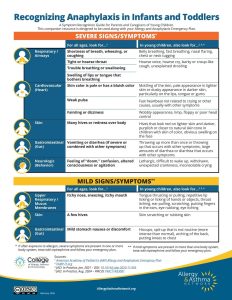
Visit our online store to download our free Recognizing Anaphylaxis in Infants and Toddlers ➤
Babies with Existing Allergies or Eczema Need Extra Attention
Some babies are at higher risk for developing food allergies. Early allergen introduction is especially important for high-risk infants.
High-risk babies include those who:
- Have moderate to severe eczema (an itchy, bumpy skin condition also called atopic dermatitis)
- Already have a diagnosed food allergy
- Have a parent or sibling with food allergies, asthma, or eczema
For high-risk infants, starting early allergen introduction as early as 4 months (when developmentally ready) provides the best protection. If your baby is high-risk, talk to your pediatrician or a pediatric allergist before introducing allergenic foods. Schedule this appointment when your baby is around 4 months of age so you can create a food allergy management plan together.
Managing eczema during allergen introduction
Babies with eczema have a weaker skin barrier. This means tiny bits of food proteins can get through the skin more easily and “teach” the immune system to react. This is a process called sensitization. When the baby later eats that food, the immune system “remembers” the protein and may trigger an allergic reaction or an eczema flare.
Research shows that delaying allergen introduction in babies with eczema actually increases food allergy risk. The key is managing your baby’s eczema well before, during and after food introduction.
Tips for introducing allergens to babies with eczema
- Work with your pediatrician or dermatologist to get eczema under good control.
- Use moisturizers regularly and follow any prescribed treatment plans.
- Introduce allergenic foods when your baby’s eczema is calm and well-managed, and focus on keeping your baby’s skin healthy to support the skin barrier.
- Consider introducing the first few allergens during or shortly after doctor’s appointments for extra support.
- Keep a food diary to track which foods your baby eats and any skin changes
When babies with early eczema later develop food allergies, asthma, or allergic rhinitis (hay fever), doctors call this progression the “atopic march”. Babies with severe eczema are at higher risk for the atopic march, so pediatricians and allergists watch these babies more closely for signs of allergic conditions as they grow.
Transitioning to family foods
As your baby grows and moves from purees to more textured foods and family meals, it’s important to keep including the allergenic foods. This transition usually happens between 8 to 12 months of age.
Tips for maintaining allergens during the transition:
- Add allergenic ingredients into soft, age-appropriate family meals (scrambled eggs, pasta with cheese, fish with vegetables).
- Mix peanut butter or almond butter into smoothies or spread thinly on soft toast.
- Offer yogurt, cheese, and other dairy products as snacks.
- Include wheat in age-appropriate forms like soft bread, pasta, or crackers.
- Watch for choking hazards as textures become more solid. Continue to mash, chop, or blend as needed.
- Continue offering allergenic foods at least 2 to 3 times per week.
This phase is a great opportunity to help your child explore new flavors and textures while maintaining the allergy prevention benefits of regular allergen exposure.

What to do if your baby has a reaction
If your baby has an allergic reaction during food introduction, stay calm and follow these steps:
- Stop feeding that food immediately.
- Watch your baby closely for any worsening or new symptoms.
- Call your pediatrician to discuss what happened and get guidance.
- Don’t try giving your baby that food again without medical supervision.
- Take photos of any visible symptoms like hives or swelling.
- Write down exactly what your baby ate, how much, and what symptoms appeared.
However, don’t let one reaction stop your entire allergen introduction plan. A reaction to eggs doesn’t mean your baby will react to peanuts, fish, or other allergens. Each food is different. Continue introducing other allergens as scheduled while you work with your doctor to create a food allergy management plan and learn more about managing food allergies from baby to preschool age.
If your baby is diagnosed with a food allergy, your pediatrician will likely refer you to a pediatric allergist. The allergist will create a comprehensive plan to manage food allergies:
- Complete avoidance of that specific allergen
- How to read labels and identify hidden sources
- Strategies to prevent cross-contact
- An epinephrine prescription and training on how to use it
- An anaphylaxis action plan for emergencies
- Discussion of treatment options like oral immunotherapy or biologic medications
How do I know if my baby is having an allergic reaction?
Watch for symptoms that appear within minutes to two hours after eating. Mild symptoms include a few hives, mild swelling, or stomach discomfort in one body system. Severe symptoms or symptoms in multiple body systems include widespread hives, trouble breathing, repeated vomiting, pale or bluish skin, or extreme lethargy. If you see severe symptoms or symptoms in multiple body systems, this could be anaphylaxis. Give epinephrine if prescribed by your child’s doctor, and review guidance specific to infant anaphylaxis and food allergies.
Emergency preparedness
Even with careful early allergen introduction and maintenance, allergic reactions and anaphylaxis can happen in babies. Being prepared helps you respond quickly and confidently, and short anaphylaxis education videos can reinforce what to do in an emergency.
Be prepared by:
- Learning the signs of anaphylaxis (symptoms affecting two or more body systems, or severe symptoms in any single system)
- Having a written Allergy and Anaphylaxis Emergency Plan that explains how to recognize reactions, when to give epinephrine, and when to call 911
- Carrying two doses of epinephrine at all times if your child has a diagnosed food allergy (sometime a second dose is needed) and understanding how to store and administer epinephrine safely
- Teaching all caregivers (grandparents, babysitters, daycare staff) how to recognize reactions and use epinephrine, and making a plan for managing food allergies safely at school
- Keeping epinephrine at the right temperature and checking expiration dates regularly
- Practicing with an epinephrine trainer device so you feel confident using it

Questions & Answers (Q&A) on Early Allergen Introduction
Here are some commonly asked questions when it comes to early food allergen introduction for babies. Always seek the advice of a medical professional for questions about your baby’s health. If there’s a question you’d like to see answered here, please email our editor.
April 2026
Reviewed by:
William E. Berger, MD, FACAAI, is a board-certified allergist and immunologist who serves as a media spokesperson and Chair of the Medical Advisory Council for Allergy & Asthma Network. He is a Distinguished Fellow and Past President (2002-03) of the American College of Allergy, Asthma & Immunology (ACAAI).


