
Inhaler Confusion
If you have asthma, you likely have more than one inhaler. It’s easy to feel confused about which one to use and when. You are not alone!
At a Glance: What Inhaler Confusion Guide Covers
Asthma inhalers fall into two main categories: quick-relief (rescue) inhalers for sudden symptoms and controller inhalers for daily prevention. Using the wrong inhaler — or using either one incorrectly — can lead to poor asthma control, more flare-ups, and emergency room visits. This guide explains:
- The difference between quick-relief and controller inhalers and when to use each one
- Types of controller medications — including inhaled corticosteroids (ICS), LABAs, LAMAs, and combination inhalers
- SMART therapy — a strategy that uses one inhaler for both daily control and quick relief
- Biologic medications — injections that work alongside inhalers for moderate-to-severe asthma
- How to use each inhaler device correctly — MDIs, DPIs, soft mist inhalers, and nebulizers
- The most common inhaler mistakes and how to avoid them
- How to organize your medications and reduce confusion at home
- When inhaler confusion becomes dangerous — and when to call 911
Key fact: Studies show up to 70% of people with asthma use their inhalers incorrectly. Proper inhaler technique and knowing which inhaler to use, and when, are among the most important steps you can take to get the most out of your medicine and breathe better.
What Is an Inhaler?
An asthma inhaler is a small device that delivers medicine directly into the lungs to help people breathe easier. The medicine is breathed in through the mouth so it can quickly reach the airways.
Asthma causes the airways to become tight, inflamed, and filled with mucus. This makes it harder to breathe. An inhaler works by sending medicine right to where the breathing problems are happening. This helps open up the airways and reduces swelling.
There are two main types of inhalers.
- A quick-relief inhaler relaxes the muscles around the airways so they open wider. It works fast.
- A controller inhaler contains medicine that reduces swelling and irritation in the airways over time. When used every day, it helps prevent asthma symptoms and asthma attacks.
When you use an inhaler, place the mouthpiece of the device in your mouth and seal your lips around it. Then press the inhaler to release the medicine while you slowly breathe it in. You hold your breath for about 10 seconds so the medicine goes deep into your lungs.
Inhalers are designed to deliver just the right amount of medicine to the lungs. They typically cause fewer side effects than medicines taken by mouth.

Why Inhaler Confusion Happens
Inhaler confusion can happen when a person does not understand which inhaler to use, how often to use it, or how each device works. This can lead to poor asthma control. Correct inhaler technique and patient education are critical for safety.
Here are some key reasons:
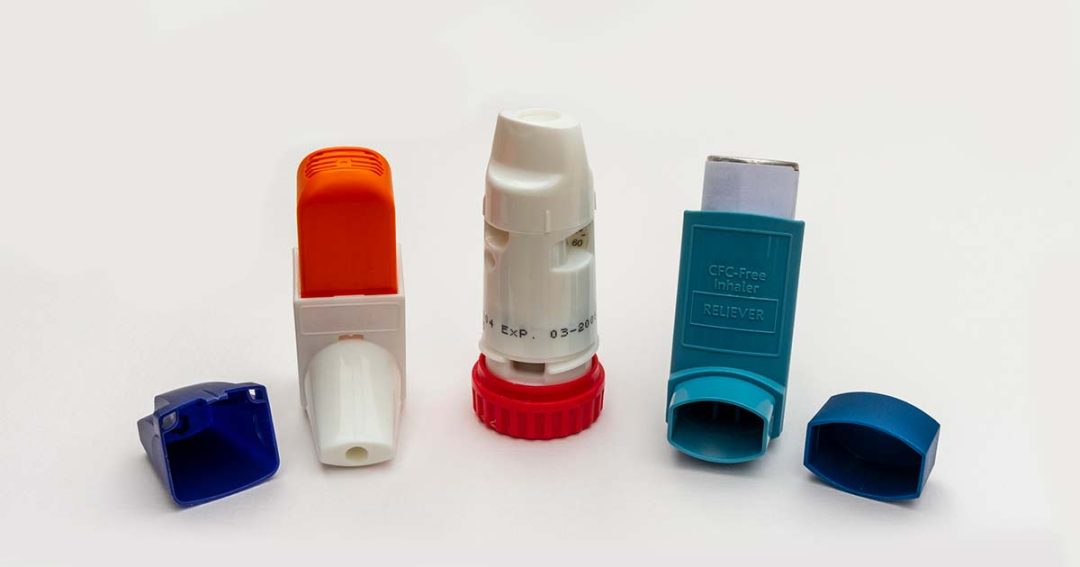
- Many devices look alike. There are dozens of different inhaler devices on the market. They might look similar but have different purposes. For example, you might have two blue inhalers: one for quick relief and another for daily control. Some inhalers reduce symptoms while others control airway inflammation.
- Medication changes. Sometimes your insurance may change, and you are switched to a new brand or device. Or perhaps your inhaler is discontinued and is replaced with an authorized generic. If you don’t get proper training on the new device, confusion can start.
- Lack of training. Many people report that their healthcare professional or pharmacist didn’t take enough time to teach them how each inhaler works and how to use it.
- No color code. Inhaler companies do not use a universal color-coding system for their devices. You can’t rely on the color of your inhaler to know what type it is.
Quick-Relief vs. Controller Inhaler: What’s the Difference?
If you have asthma, you may use two different types of inhalers. They are not interchangeable. One treats sudden symptoms. The other prevents symptoms from happening.
Watch this Ask the Allergist video for a better understanding of the difference between quick-relief vs. controller inhalers.
Knowing the difference between quick-relief and controller inhalers is key to controlling your asthma. Think of it like this:
- Quick-relief (rescue) inhaler is like a fire extinguisher (for emergencies).
- Daily controller inhaler is like a smoke detector (for prevention).
| Feature | Quick-Relief (Rescue) Inhaler | Daily Preventer (Controller) Inhaler |
|---|---|---|
| Purpose | To stop a sudden asthma flare-up or symptoms. | To prevent asthma symptoms by reducing airway swelling. |
| Medication in the Inhaler | Albuterol for short-acting beta-agonists (SABA). A SABA combined with an inhaled corticosteroid (ICS) is also available as a quick-relief medication. | Inhaled corticosteroid or a combination of medicines. |
| How Fast it Works | Starts working within minutes. | Takes 2 to 4 weeks of daily use to take full effect. |
| When to Use It | Only when you have symptoms (coughing, chest tightness, wheezing, or shortness of breath). | Every day on a set schedule, even when you feel good. |
| When to Call Your Healthcare Professional | If you need it more than twice a week (not counting before exercise or very cold weather). This means your asthma is not under control. | If your symptoms start to get worse. |
| Rinse Mouth? | Rinsing is advised after albuterol to support dental health. | Yes, always rinse with water and spit after use. |
Using the right inhaler at the right time is essential for asthma control.
Note: SABA-only inhalers are still prescribed for people, but many are now advised to use inhalers that also include an inhaled corticosteroid (ICS) to treat inflammation during flare-ups.

Quick-Relief (Rescue) Inhalers
Quick-relief inhalers are your as-needed medicines for sudden asthma symptoms. They work fast to open your airways and help you breathe better during a flare-up.
Asthma flare-ups happen because:
- The muscles around your airways tighten.
- The airways become swollen and inflamed.
Global Initiative for Asthma (GINA) guidelines recommend the use of quick-relief inhalers that treat both problems. This may involve a combination of albuterol and an inhaled corticosteroid.
What do quick-relief inhalers do?
Quick-relief inhalers help your airways in different ways:
SABA (Short-Acting Beta-Agonist) Only
- Relaxes airway muscles fast
- Starts working within minutes
- Lasts about 4–6 hours
- Does not treat inflammation
Examples:
- ProAir HFA
- Ventolin HFA
Albuterol + Inhaled Corticosteroid (ICS) Combination
- Combines a SABA (fast relief) + ICS (reduces swelling)
- Treats both airway tightening and inflammation
- Works quickly during flare-ups
Example:
- AirSupra®
Adults can use this as-needed for symptom relief, if their provider says it’s right for them.
Low-Dose ICS: Formoterol (SMART Therapy)
- Formoterol works fast and lasts up to 12 hours
- Can be used every day and as-needed for flare-ups
- Treats inflammation and opens airways at the same time
Examples:
- Symbicort
- Dulera (this inhaler is not currently approved by FDA for use as a quick-relief medicine in SMART therapy, but it may be given off-label for this purpose)
Your healthcare provider will tell you which quick-relief inhaler is right for you.
When to use your quick-relief asthma medication
Use your quick-relief (rescue) inhaler as soon as you have symptoms such as:
- Coughing
- Wheezing
- Chest tightness
- Shortness of breath
If you are using SMART therapy, you will also use your combination inhaler for symptom relief.
How fast does quick-relief asthma medication work?
All quick-relief inhalers start opening your airways within minutes. Combination and SMART inhalers also begin reducing swelling right away.
Call your healthcare provider if you:
- Use your quick-relief inhaler more than twice a week for symptoms.
- Use it multiple times per day.
- Wake up at night with asthma symptoms.
Frequent use may mean your asthma is not under control and your treatment plan needs adjusting.o is at risk of developing asthma?
Daily Controller Medications
Several types of controller medications are available. Each one works in a different way to keep your asthma under control. Here is a breakdown of the main types.
Inhaled Corticosteroids (ICS)
These are the most commonly prescribed controller medications for asthma. They work by reducing swelling and inflammation inside your airways over time. You will not feel them working right away, but with daily use, they make your airways less sensitive to triggers.
- Examples: QVAR® (beclomethasone), Arnuity® (fluticasone furoate), Pulmicort® (budesonide), Asmanex® (mometasone).
Long-Acting Beta-Agonists (LABAs)
LABAs are bronchodilators, meaning they relax the muscles around your airways to keep them open. They are called “long-acting” because their effects last for about 12 hours. LABAs are never used alone for asthma. They are always paired with an inhaled corticosteroid because using a LABA by itself can increase the risk of serious asthma problems. If your healthcare professional prescribes a LABA, it will be combined with a corticosteroid in the same inhaler.
- Examples of LABAs (always used in combination with an ICS): Salmeterol, Formoterol, Vilanterol.
Long-Acting Muscarinic Antagonists (LAMAs)
LAMAs are another type of long-acting bronchodilator. They work differently than LABAs. Instead of relaxing the airway muscles directly, they block a chemical signal that causes the airways to tighten. LAMAs are used more often for COPD (chronic obstructive pulmonary disease), but some are approved as an add-on treatment for asthma when a corticosteroid and LABA combination is not enough to control symptoms on its own.
- Examples approved for asthma: Spiriva® Respimat® (tiotropium).
Combination Inhalers
Combination inhalers put two or even three medications into one device. This makes it easier to take your medicines because you use one inhaler instead of two or three separate ones. There are several types of combinations:
- ICS + LABA (Corticosteroid + Long-Acting Beta-Agonist). These are the most common combination inhalers for asthma. They reduce inflammation and keep your airways open at the same time.
- Examples: Advair® (fluticasone/salmeterol), Symbicort® (budesonide/formoterol), Breo® Ellipta® (fluticasone furoate/vilanterol), Dulera® (mometasone/formoterol).
- ICS + LAMA (Corticosteroid + Long-Acting Muscarinic Antagonist). These combine an anti-inflammatory medicine with a different type of bronchodilator.
- A single inhaler combining an ICS and LAMA is not yet widely available for asthma in the U.S. Your healthcare provider may prescribe a separate ICS inhaler alongside a LAMA to achieve this combination
- ICS + LABA + LAMA (Triple Therapy). These inhalers combine three types of medication in one device. They combine a corticosteroid to reduce inflammation, a long-acting beta-agonist to relax airway muscles, and a long-acting muscarinic antagonist to prevent airway tightening. Triple therapy is typically used for people whose asthma is hard to control.
- Example: Trelegy® Ellipta® (fluticasone furoate/umeclidinium/vilanterol).
| Medication Type | What It Does | Used Alone for Asthma? | Examples |
|---|---|---|---|
| Inhaled Corticosteroid (ICS) | Reduces airway inflammation | Yes | Flovent, QVAR, Pulmicort, Asmanex, Arnuity |
| Long-Acting Beta-Agonist (LABA) | Keeps airways open for ~12 hours | No (always combined with an ICS) | Salmeterol, Formoterol, Vilanterol |
| Long-Acting Muscarinic Antagonist (LAMA) | Blocks signals that tighten airways | No (used as add-on therapy) | Spiriva Respimat (tiotropium) |
| ICS + LABA Combination | Reduces inflammation + keeps airways open | Yes (as a combination) | Advair, Symbicort, Breo, Dulera |
| ICS + LABA + LAMA (Triple Therapy) | All three actions in one inhaler | Yes (as a combination) | Trelegy Ellipta |

What Is SMART Therapy?
SMART therapy stands for Single Maintenance And Reliever Therapy. It is an asthma treatment approach in which one inhaler is used for both daily control and quick symptom relief.
Instead of using:
- A daily controller inhaler
- AND a separate quick-relief inhaler
SMART therapy uses a single combination inhaler containing an inhaled corticosteroid (ICS) and formoterol for both purposes.
You take:
- Scheduled daily doses for prevention
- Extra puffs from the same inhaler when symptoms occur
How SMART Therapy works
SMART therapy only works with inhalers that contain:
- An inhaled corticosteroid (ICS) to reduce airway inflammation
- Formoterol, a long-acting beta-agonist (LABA) that works quickly
Formoterol is unique because:
- It starts working within minutes (like albuterol).
- It lasts about 12 hours.
- It can safely be used as both maintenance and reliever when combined with an ICS.
Not all LABAs can do this. Medications like salmeterol or vilanterol cannot be used as quick-relief therapy.
Which inhalers are used for SMART Therapy?
Only ICS–formoterol combinations are used for SMART therapy, including:
- Symbicort® (primary FDA-approved inhaler for SMART therapy)
- Dulera® (used off-label in some cases and is not FDA-approved for SMART)
These inhalers contain:
- An inhaled corticosteroid to reduce inflammation
- Formoterol to open the airways quickly
Why SMART Therapy can reduce asthma attacks
SMART therapy has been shown to:
- Reduce severe asthma flare-ups
- Decrease emergency room visits and lower hospitalization risk
- Improve overall asthma control
Why?
When symptoms begin, patients automatically take extra anti-inflammatory medicine, not just a bronchodilator. This treats both:
- Airway tightening
- Underlying inflammation
Major asthma guidelines, including the GINA guidelines and National Heart, Lung, and Blood Institute (NHLBI) guidelines, recommend ICS-formoterol as a preferred reliever strategy for many adolescents and adults with persistent asthma.
Who can use SMART Therapy?
SMART may be recommended for:
- Adults and children 12 years of age and older with moderate to severe persistent asthma
- People who continue having asthma symptoms despite daily controller use
- People who frequently use a quick-relief inhaler for treatment of symptoms
- People who struggle with inhaler confusion
Some children ages 6–11 may qualify under specialist guidance.
SMART is not appropriate for everyone. Your healthcare provider will prescribe SMART based on:
- Your asthma severity
- Your risk of flare-ups
- Whether your inhaler device is appropriate
- Whether you are maximizing dose delivery of your inhalers
Can I use Symbicort® as a quick-relief (rescue) inhaler?
Yes, you can use Symbicort as a quick-relief inhaler if your healthcare provider prescribes it as part of SMART therapy.
When prescribed under a SMART plan, Symbicort can be used as both a:
- Daily for maintenance
- As needed for symptom relief
However, do not switch to SMART therapy on your own. Always follow your doctor’s written Asthma Action Plan.
Benefits of SMART Therapy
- Simplifies asthma treatment
- Reduces confusion between inhalers
- Provides anti-inflammatory medication during flare-ups
- Lowers risk of severe attacks
- May improve taking medication as prescribed
For many people, one inhaler strategy improves both safety and convenience.

Visit our online store to download our free respiratory treatment poster or purchase print copies.
The respiratory treatment poster is an asthma medication chart. It lists asthma inhalers by brand name as well as biologic medications used to treat asthma.
Common Inhaler Device Types
The way you take your medicine matters. Each device needs a different technique.
- Metered-Dose Inhalers (MDIs). These are the traditional “spray” inhalers. They release a measured puff of medicine. They require good coordination: you must press the canister and breathe in slowly at the same time. Most healthcare professionals recommend using a spacer with an MDI to get more medicine to your lungs.
- Note: Not all MDIs can use a spacer. Breath-activated devices like QVAR Redihaler™ and ProAir RespiClick® are MDI-like but are used without a spacer.
- Dry Powder Inhalers (DPIs). These devices deliver medicine as a fine powder. They are breath-activated, meaning you must breathe in quickly and deeply to breathe the medicine into your lungs. They do not require a spacer.
- Soft-Mist Inhalers. These release medicine as a slow-moving mist that is inhaled. For some people, they are easier to use than MDIs.
Another common asthma medication delivery device is a nebulizer. This is not an inhaler. A nebulizer is a machine that turns liquid medicine into a fine mist you breathe in, sometimes through a mouthpiece or mask. They are often recommended for young children, older adults, or for people who have trouble using a regular inhaler. They are also used in emergency situations for severe asthma attacks. The treatment usually takes longer (5 to 15 minutes) and is generally done at home, as they are not as portable as inhalers. Both quick-relief and some controller medications come in nebulizer form.
How to Use an Asthma Inhaler Correctly
For better asthma control, Allergy & Asthma Network has compiled both video and reading instructions for proper inhaler technique. If you’re still unsure and would like help, sign up for our freeVirtual Asthma Coaching Program.
Video series in Spanish on how to use an asthma inhaler
How to use a metered dose inhaler
How to use a dry powder inhaler
How to use a slow-moving mist inhaler (general)
How to Use a Slow-Moving Mist Inhaler QVAR® Redihaler™ or ProAir RespiClick® (for children)
Video series on how to use an asthma inhaler
How to Maintain Your Asthma Inhaler
Proper cleaning and priming of your inhaler are simple steps that prevent mistakes, keep your inhaler working correctly, and make sure you get the full dose of your medicine every time.
How to clean your Metered-Dose Inhalers (MDIs) and spacers
- How Often: Clean your MDI and spacer at least once a week.
- MDI Cleaning:
- Take out the metal medicine canister. Do not get the canister wet.
- Rinse the plastic casing (the part you put in your mouth) under warm running water for about 30 seconds.
- Let the plastic casing air dry completely overnight. Do not wipe it with a towel because lint can get stuck.
- Tip: Keep a clean plastic casing from a previous MDI in a safe spot in case you need your quick-relief inhaler in a pinch while the current casing is drying.
- Spacer Cleaning:
- Take the spacer apart.
- Wash all the pieces with warm water and a little mild dish soap.
- Do not rinse the soap off. Let it air dry completely overnight. The tiny bit of soap left on the plastic helps the medicine spray work better.
How to clean your DPI
- NEVER use water.
- Wipe the outside of the mouthpiece with a dry cloth or tissue.
- How Often: Clean your DPI at least once a week.
Storage and temperature
- Where to Keep It: Keep all your inhalers at room temperature.
- Avoid: Do not leave your inhaler in a hot or cold car. Extreme heat or cold can ruin the medicine or the sprayer, so it won’t work when you need it.
Priming your inhaler
Sometimes you need to do a test spray, or “prime,” your inhaler to make sure the next dose is correct. This is important for metered-dose inhalers (MDIs) and soft mist inhalers. Dry powder inhalers (DPIs) do not need to be primed.
When to prime your MDI or soft mist inhaler
- When New: The very first time you use a new inhaler.
- If Dropped: If you drop the inhaler.
- After Time: If you have not used the inhaler for a few days (check the instructions, it is often 3 to 7 days).
How to prime your inhaler
- Make sure the cap is off and the mouthpiece is clean.
- Hold the inhaler upright.
- Shake the inhaler 3 to 5 times.
- Spray a test puff or a few test puffs into the air, away from your face, until a fine mist comes out.
- Your inhaler is now ready to use.
Common Inhaler Mistakes
Understanding what mistakes to avoid can help with correct use of your inhalers. Here are the 10 most common errors people make with their asthma inhalers.
- Using the wrong inhaler for the situation. The most serious mistake is using your quick-relief inhaler when you should be using your controller inhaler daily. Another critical error is trying to use a controller inhaler for quick relief during an asthma attack. Each inhaler has a specific purpose, and they’re not interchangeable.
- Stopping controller medication when feeling better. Many people think they only need their controller inhaler when they have symptoms. However, controller medications work by preventing inflammation, and stopping them allows inflammation to return. This is why you must use controller inhalers every day, even when you feel great.
- Incorrect inhaler technique. Studies show that most people don’t use their inhalers correctly. Common technique errors include not shaking MDIs, breathing in too slowly or too quickly, no breath hold after inhalation, and not breathing out fully before using the inhaler. If you think you are not using correct technique, or you are not getting as much medicine our of your inhaler, follow up with your healthcare provider.
- Not shaking MDIs before use. Metered-dose inhalers need to be shaken for 3 to 5 seconds before each puff to mix the medication properly. Skipping this step means you might not get the correct dose of medication.
- Not using a valved holding chamber or spacer when recommended. Valved holding chambers and spacers can significantly improve medicine dose delivery to your lungs and reduce side effects like thrush (a yeast infection in your mouth). If your healthcare professional recommends a spacer, it’s important to use it every time.
- Not rinsing your mouth after using any inhaler. While rinsing is critical for corticosteroid inhalers to prevent a yeast infection, it is also recommended after using albuterol and other rescue inhalers to help prevent dental cavities and decay (dental caries). Rinsing with water and spitting it out is an important step to protect your oral health.
- Using expired inhalers. Medications lose their effectiveness over time. Check the expiration date on your inhalers regularly and get refills before they expire. Using expired medication may not provide enough symptom control.
- Not tracking doses remaining. While all new inhalers are now required to have a dose counter, it’s still possible to forget to look. Never rely on the “feel” or sound of the canister. Get a refill before the counter hits zero, so you don’t run out during an asthma attack. Sign-up for auto-refills if possible.
- Confusing similar-looking inhalers. If you have multiple inhalers that look alike, it’s easy to grab the wrong one. This is especially dangerous if you use your controller inhaler thinking it’s your rescue inhaler during an emergency.
- Not coordinating breath with MDI activation. With MDIs, you need to start breathing in slowly just before or right as you press down on the canister. Pressing the canister before you start breathing in, or breathing in too quickly, means less medication reaches your lungs.
Quick Facts: Inhaler Technique
Your inhaler only works if the medicine reaches your lungs. Here’s what you need to know:
- Different inhalers need different techniques. If you use both an MDI (spray inhaler) and a DPI (powder inhaler), make sure you know the correct steps for each one. The technique is not the same.
- Breathe the right way for your inhaler.
- MDI (spray): breathe in slowly and deeply
- DPI (powder): breathe in fast and deeply
- A valved holding chamber or spacer can help. If you use an MDI, a spacer makes it easier to get the medicine all the way into your lungs. Learn how to use a valved holding chamber or spacer →
- Even good technique can slip over time. About half of all people develop mistakes in their inhaler use without realizing it. Ask your doctor or pharmacist to watch you use your inhaler at every visit, even if you’ve been doing it for years.
- Children’s technique needs extra attention. As kids grow, their breathing changes. Their inhaler technique should be checked regularly, especially when switching to a new device.
- Exercise and cold weather tip. If physical activity or cold air triggers your asthma, your doctor may recommend using your quick-relief inhaler 15 to 30 minutes before you exercise or go outside in the cold. Ask if this is right for you.
- Using the wrong technique leads to more asthma attacks and hospital visits. Getting it right is one of the most powerful things you can do for your health.
- Ask about SMART therapy. One inhaler for both daily control and quick relief — it may be an option for you. Learn about SMART therapy →
- Speak up at every appointment. Your doctor or pharmacist should check your inhaler technique every time you visit. If they don’t ask, then you should ask them. There are no silly questions when it comes to breathing.
- Watch our step-by-step inhaler technique videos to make sure you’re using your inhaler the right way every time. The videos are available in English and Spanish.

How to Avoid Asthma Medication Confusion
Taking proactive steps to organize your medications and improve your knowledge can reduce any confusion.
Organize your asthma inhalers
You can take control of your medications with simple steps.
- Label clearly. Use a permanent marker or label maker to write the purpose on each inhaler, such as “DAILY PREVENTER” or “QUICK-RELIEF FOR SYMPTOMS.”
- Separate storage. Store your daily controller in one spot (like next to your toothbrush) and your rescue inhaler in another spot (like your purse or backpack).
- Use a chart. Post a simple chart where you take your medicine that lists each inhaler, when to use it, and how many puffs to get the right amount. Check it off each day.
- Use apps. Set up smartphone reminders or use an asthma tracking app to remind you to take your daily controller dose.
Education and communication
- Ask for a demonstration. Ask your healthcare provider to watch you use your inhaler at every visit. Pharmacists may be able to help, too. This is the best way to correct mistakes in your technique.
- Get written instructions. Ask your healthcare provider for written instructions for each inhaler.
- Know your dose. Inhalers have a dose counter. Make sure to order your next one before your current one runs out.

Creating an Asthma Action Plan
Work with your healthcare provider to create a written Asthma Action Plan. This personalized document outlines your daily medications, how to recognize worsening symptoms, when to use your rescue inhaler, when to adjust medications, and when to seek emergency care. Research shows that using an Asthma Action Plan can reduce the risk of poor health outcomes.
Your Asthma Action Plan should clearly state which inhaler you use daily and which one is for sudden symptoms. It is usually divided into three zones: green (doing well), yellow (getting worse), and red (medical emergency), similar to a traffic light.
Review and update your Asthma Action Plan at least once a year or whenever your medications change. Bring it to every health care appointment and make sure all family members or caregivers know where to find it.
Your doctor may also advise you monitor your breathing using a peak flow meter. This is a small handheld device that measures how well air is moving out of your lungs. This can help you identify when asthma symptoms are starting to emerge.
Your Asthma Action Plan should include your peak flow meter readings. It should also include specific instructions for what to do if the readings show signs are worsening.

Questions for Your Doctor
Being an active participant in your asthma care means asking the right questions. Here are important questions about your inhalers to discuss with your healthcare provider.
- Which inhaler do I use every day, even when I feel fine? This helps you clearly identify your daily controller medication and understand that it’s not optional based on how you feel.
- Which inhaler is for sudden symptoms like wheezing or shortness of breath? This confirms which inhaler is your quick-relief (rescue) medication and ensures you know when to use it.
- Can you watch me use my inhaler to make sure I’m doing it correctly? Having a healthcare professional observe your technique is the best way to catch and correct mistakes.
- What should I do if I miss a dose of my controller inhaler? Knowing whether to take it as soon as you remember or skip it and wait for the next scheduled dose prevents double-dosing or gaps in treatment.
- How will I know when my inhaler is empty or almost empty? All inhalers are now required to have a dose counter that shows exactly how many doses remain. You should never rely on the “feel,” sound, or the “float test” (putting the canister in water), as these methods are outdated and inaccurate. They can also damage your inhaler. Get a refill before the counter hits zero, so you don’t run out unexpectedly during an asthma attack.
- Should I use a spacer with my inhaler? Not all inhalers require spacers, but these devices are often very helpful for patients. It’s important to know if one would improve your medication delivery.
- What side effects should I watch for with each inhaler? Knowing what’s normal and what requires medical attention helps you use your medications safely.
- Can I use my quick-relief inhaler before exercise? If you have exercise-induced asthma symptoms, your healthcare provider may recommend you use your quick-relief inhaler 15 to 30 minutes before physical activity. NOTE: This also can be the same for cold weather asthma.
- When should I call you, and when should I go to the emergency room? Understanding the difference between symptoms that need a phone call and symptoms that need emergency care can be lifesaving.
- How often should I be using my quick-relief inhaler? This can help you understand whether your asthma is well-controlled or if your treatment plan needs adjustment.
- Are there any medications or supplements I should avoid while using these inhalers? Some medications can interact with asthma treatments or worsen asthma symptoms.

Inhaler Technique for Certain Groups
Some groups of people face unique challenges when it comes to inhaler use and may need additional support or different devices.
Device confusion in children
Children need age-appropriate inhaler devices and often require supervision to ensure proper use. Young children typically use nebulizers or MDIs with spacers and masks, while older children may be able to use standard MDIs with spacers or certain dry powder inhalers.
Parents and caregivers need thorough education on each inhaler’s purpose and proper technique. It’s important to teach children the difference between their daily medicine and their quick-relief medicine using simple language they understand, such as “preventer medicine” and “quick-relief” or “rescue medicine.”
School medication management requires additional planning. Provide the school nurse with a copy of your child’s Asthma Action Plan, ensure they have a quick-relief inhaler at school, and complete any required medication authorization forms.
As children grow and develop better understanding of asthma and how to use medication, they can take on more responsibility for their asthma management. However, adult supervision remains important through the teenage years to ensure consistent use of controller medications.
Seniors and inhaler use
Older adults may face challenges with inhaler use due to arthritis, reduced hand strength, vision problems, or memory issues. These challenges can make it difficult to press down on MDI canisters, read small print on drug labels, or remember which inhaler to use when.
Choosing the right device is crucial for seniors. Breath-activated inhalers or nebulizers may be easier for those with arthritis or coordination difficulties. Large-print labels and simplified medication schedules can also help.
Caregiver involvement becomes important when seniors have memory problems or difficulty managing multiple medications. Caregivers should understand each inhaler’s purpose and help ensure medications are taken correctly and on schedule.
Pill organizers don’t work for inhalers, but creating a visual chart with pictures of each inhaler and checkboxes for each dose can serve a similar purpose. Some families also use automatic medication dispensers with alarms to remind seniors when to take their medications.
Managing multiple respiratory conditions
Some people have both asthma and chronic obstructive pulmonary disease (COPD), a condition called asthma-COPD overlap syndrome. These individuals may use several different inhalers for different purposes. This can make organization and education even more critical.
Even if symptoms seem similar, different respiratory conditions can require different inhalers. For example, COPD medications often include long-acting bronchodilators that aren’t typically used for asthma alone. It’s essential to understand which inhaler treats which condition.
Coordination strategies become vital when managing multiple respiratory conditions. Using a detailed medication list with each inhaler’s name, purpose, and schedule can prevent confusion. Some people find it helpful to organize their inhalers by time of day rather than by condition.

When Inhaler Confusion Becomes Dangerous
When you’re confused or overwhelmed with your medication and treatment plan, mistakes can happen. This can be dangerous. Understanding the warning signs of poor asthma control and the consequences of using the wrong inhaler should motivate you to get the education and support you need.
Signs of poor asthma control include:
- needing your quick-relief inhaler more than twice a week
- waking up at night with asthma symptoms
- having to limit your activities due to asthma
- experiencing frequent asthma flare-ups that require an ER visit or hospitalization
These symptoms suggest that your current treatment plan isn’t working well enough.
If you use only your quick-relief inhaler without taking a controller medication, the inflammation in your airways may continue to worsen even though you’re temporarily relieving symptoms. Over time, this can lead to airway damage and more severe asthma.
Overusing quick-relief medications is a red flag that your asthma isn’t controlled. Using your quick-relief inhaler daily or multiple times per day (except before exercise if recommended) means you need better long-term control. Overuse can also cause side effects like rapid heartbeat, shakiness, and nervousness.
Underusing controller medications is equally dangerous. When you don’t take your controller inhaler as prescribed, inflammation builds up in your airways, making them more sensitive to triggers. This can increase your risk of severe asthma attacks that may require emergency care or hospitalization.
You should seek immediate medical attention if…
- you use your quick-relief inhaler but your symptoms don’t improve within 15 to 20 minutes;
- you’re too short of breath to speak in complete sentences;
- your lips or fingernails turn blue;
- you feel confused or extremely tired during an asthma attack.
These are signs of a medical emergency.
Research shows that people who use their inhalers incorrectly are at higher risk to go to the emergency department and be hospitalized for asthma. Proper inhaler use and understanding can keep you out of the hospital.

Resources and Tools for People with Asthma
Many resources are available to help you understand and manage your asthma and medication usage effectively.
Allergy & Asthma Network offers free educational materials, including inhaler technique videos, Asthma Action Plan templates, and information about different types of asthma treatments. There is also a free asthma coaching program for eligible adults.
We also offer a free printable medication tracker to help you keep a record of when you take each dose of your controller inhaler. These trackers can be especially helpful when you’re first starting a new medication routine and trying to build a habit.
You can check out mobile apps for asthma management. Some apps include features like medication reminders, symptom tracking, peak flow recording, and trigger identification.
Patient education materials from Allergy & Asthma Network’s store includes information about asthma medications, asthma control, smoking, climate change, asthma triggers, indoor air pollution and other asthma topics in both English and Spanish.
Questions and Answers (Q&A) on Inhaler Confusion
You may have questions on how to use your inhaler correctly, whether you are using poor inhaler technique, and which inhaler to use for sudden symptoms. If you have a question that you don’t see answered here, please email the editor.
April 2026
Reviewed by:
Bradley Chipps, MD, FACAAI, is a board-certified allergist and pediatric pulmonologist with Capital Allergy and Respiratory Disease Center in Sacramento, California. He earned his medical degree from University of Texas Medical Branch in Galveston in 1972. He is Past President of the American College of Allergy, Asthma and Immunology (ACAAI).


