USAsthma Summit 2025: What Does the Future of Asthma Care Look Like?
Published: November 14, 2025
New asthma therapies. Proven, evidence-based treatments. Community-centered programs. These breakthroughs in asthma care have expanded treatment options and improved quality of life for countless individuals.
Now, Allergy & Asthma Network is committed to making sure these innovations reach everyone, navigating the challenges of today’s complex healthcare system to ensure no one is left behind.
The healthcare breakthroughs and challenges were in the spotlight on Nov. 7, 2025, at the 11th annual USAsthma Summit in Orlando, Florida. Hosted by Allergy & Asthma Network, the USAsthma Summit coincides with the American College of Allergy, Asthma & Immunology (ACAAI) Annual Scientific Meeting, also in Orlando.
The theme of this year’s Summit: “Bridging Access, Education and Innovation for Future Asthma Care.” More than 70 people attended the in-person event and another 650 joined via our interactive livestream.
Asthma is a chronic condition that continues to be a major U.S. public health issue. More than 28.2 million Americans have asthma and about 10 people die each day of the disease. Many live with severe, uncontrolled or persistent asthma, with ongoing symptoms of cough, wheeze, difficulty breathing and chest tightness.
Speakers at the interactive, one-day event addressed:
- The state of asthma in the United States
- Asthma in populations with healthcare disparities
- How the rise in marijuana and cannabis use impacts asthma
- The challenges of asthma self-management
- Asthma care in schools
- Biologics and the possibility of asthma remission
- Ongoing changes in federal support for asthma
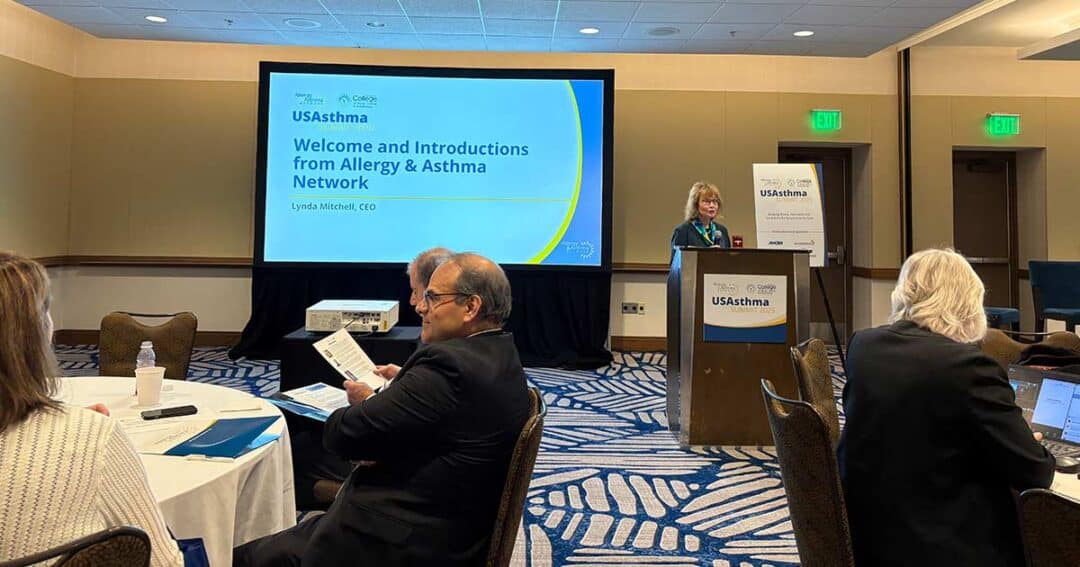
“The USAsthma Summit is one of the most important gatherings in our field,” says Allergy & Asthma Network CEO Lynda Mitchell. “It’s only together that we can advance patient-centered asthma care.”
Persistent disparities are evident in asthma outcomes, in access to care, and how communities experience this disease, she added.
“Our work here is about closing those gaps,” Lynda said. “It’s about ensuring that whether you live in an urban neighborhood or a rural community, no matter what your age, your background, or your circumstances, that you have the knowledge, the resources, the support, and the advocacy that you need.”
What is the USAsthma Summit?
The USAsthma Summit provides in-person and virtual attendees with an up-to-date look at the state of asthma in the United States and the need for guidelines-based asthma care. It was moderated by Sherrina Gibson, Analytics Strategy Consultant with Allergy & Asthma Network.
The Summit brings together…
- asthma coalitions
- state asthma programs
- community asthma programs
- physicians and other healthcare professionals
- school nurses
- community health workers
- people with asthma and their caregivers
- patient advocates
- key stakeholders in asthma care
Sherrina Gibson, Analytics Strategy Consultant with Allergy & Asthma Network, served as moderator of the USAsthma Summit.
“We gather at a time when the landscape of asthma is changing,” Sherrina said. “New therapies are emerging, yet access and affordability remain uneven. Communities are still grappling with disparities that leave Black, Hispanic/Latino, rural and low-income families at higher risk. And public policy continues to shift in ways that directly impact the resources available for care, prevention and research.”
Sherrina urged attendees to think beyond the presentations – to use the insights and knowledge gained to drive meaningful change in the communities they serve.
The State of Asthma in the United States, James Tracy, DO, FACAAI, President, ACAAI
Dr. James Tracy shared an in-depth look at asthma’s current landscape in the United States – from the growing prevalence of the disease to promising advances in treatment.
In 2025, asthma continues to be a major U.S. public health issue. Today, 28 million people in the U.S. live with asthma, including 1 in 12 school-aged children. The annual cost of care exceeds $80 billion, with 3,600+ deaths and millions of missed school and workdays each year.
“While guidelines-driven management is effective, many patients, especially children and underserved communities, face ongoing barriers to optimal asthma control,” Dr. Tracy said.

Dr. Tracy emphasized that asthma “still kills,” and noted that poor adherence to prescribed medications remains a major challenge. Warning signs such as nighttime symptoms and increasing inhaler use should not be ignored.
Treatment strategies have evolved significantly in the last decade. The focus is on how to reduce inflammation with medications. The latest guidelines highlight inhaled corticosteroids, combination inhalers and biologics – injectable medicines that target the specific cells driving inflammation.
Several new biologics are now available, with more on the horizon. One new biologic offers the promise of less frequent dosing – twice-per-year injections. Another targets non-eosinophilic asthma.
Research will continue to be vital for optimizing care of asthma patients and preventing hospitalization and death.
Additional Resources
Marijuana/Cannabis: Risks and Considerations for Users with Asthma and other Respiratory Diseases, Anil Nanda, MD, President of the Texas Allergy, Asthma & Immunology Society
As cannabis use becomes more widespread, understanding its impact on people with asthma and other respiratory diseases is increasingly important. Dr. Anil Nanda explained the risks of marijuana for people with asthma and other breathing problems.
Marijuana can be used in different ways – smoked, vaped, eaten, or used as oils. But smoking marijuana is the most common and the most harmful to the lungs. It is also an asthma trigger. When people smoke marijuana, they breathe in more deeply and hold it in longer than cigarette smoke. This means they take in more tar and harmful chemicals, including carbon monoxide and ammonia. These can damage the lungs, just like tobacco smoke.
People who smoke marijuana often have more symptoms of coughing, wheezing, mucus, and hoarseness. It can make asthma worse, cause more flare-ups, and increase inhaler use. The good news is that quitting marijuana can help improve breathing and reduce symptoms.
Some people can also be allergic to marijuana, which may cause hives, swelling, or trouble breathing. This can lead to allergic asthma symptoms.
While parts of marijuana like cannabidiol (CBD) may help with certain health problems such as nausea, most marijuana products you buy are not well regulated, Dr. Nanda said. This means the strength and safety can vary from product to product.
Dr. Nanda urged doctors to talk with patients about marijuana in a caring, nonjudgmental way, as state laws differ and stigma can affect disclosure. “It’s important to ask and listen,” he said. “Our role is to educate, listen, and guide patients safely, with both the risks and potential benefits in mind. That’s how we help patients make the best choices for their health.”
Additional Resources
- Webinar – ‘Marijuana Use and Asthma: Risks and Considerations for Users’ (January 2025)
- Cannabis Attitudes and Patterns of Use Among Followers of Allergy & Asthma Network
Studying Asthma in Populations with Healthcare Disparities: The PREPARE Study, Elliot Israel, MD, Professor of Medicine, Harvard Medical School.
Dr. Elliot Israel shared groundbreaking findings from the NIH-funded PREPARE Study. He led the research, which focused on improving asthma outcomes in underserved Black and Hispanic/Latino communities. These groups are at increased risk to have asthma, visit the emergency room, and die from the disease compared to white patients.
Dr. Israel explained that social and structural factors can make symptoms of asthma worse. These factors include housing conditions, access to healthy food, pollution, and stress from financial or neighborhood challenges. They can even affect how people respond to treatment.
The PREPARE Study tested a patient-friendly approach called “Patient-Activated Reliever and Triggered Inhaled Corticosteroid,” or PARTICS. Instead of changing medications or routines, participants were told to use an inhaled corticosteroid each time they used their quick-relief inhaler or nebulizer. This approach helped ensure patients got anti-inflammatory treatment whenever they had symptoms.
More than 1,200 Black and Latinx patients took part in the study. Participants who used the PARTICS method had:
- fewer asthma attacks
- better asthma control
- improved quality of life
- fewer missed days of work or school
They also used less albuterol and needed fewer hospital visits.
Dr. Israel credited the study’s success to strong patient partnerships. Patients helped design the study, shape the messages, and make sure materials reflected language and culture. The PREPARE Study is a model for making asthma care more effective, inclusive, and equitable for all communities.
Additional Resources
- PCORI Evidence Update for the PREPARE Study for Patients
- PCORI Evidence Update for the PREPARE Study for Clinicians
Allison’s Story, as told by Lisa Wise
Lisa Wise shared the heartbreaking story of her stepdaughter, Allison, to remind everyone why asthma awareness and management matter.
Allison was diagnosed with asthma before age 2. By age 23, she was living in Florida and working as a pharmacy technician. But her asthma had started to worsen. Just 18 days before she died, she told paramedics, “When I have an asthma attack, I feel like I’m suffocating.”
During that ER visit, she received a chest X-ray and a corticosteroid shot. Then she was sent home with a $1,400 bill. No breathing treatment was given. Lisa now wonders if the asthma wasn’t taken seriously enough.
On August 2, 2024, Allison suffered a severe asthma attack at home. Her quick-relief inhaler was empty, and a nebulizer treatment didn’t help. She went into cardiac arrest and never regained consciousness.
Lisa said Allison was more than a statistic. She was “funny, kind, lit up any room that she entered, and wanted to become a radiology technician.”
Lisa urged others to talk openly about asthma, learn about triggers, and never assume it’s under control. “I have to admit that I did not realize that asthma could kill,” she said. “And I realize it’s inconceivable to many other people, too.”
“I want people to come away from this and do the things I wish I had done. Be the squeaky wheel. Don’t have a false sense of security. Allison can’t be saved, but her story can save someone else.”
Living and Practicing Through the Challenges of Asthma Self-Management, Angela Garcia, PharmD, MPH, CPh, Garcia Consulting
Dr. Angela Garcia, a pharmacist and public health professional, knows what it’s like to live with asthma. As a child, she often went to the emergency room when she couldn’t breathe. Her parents thought that once she felt better, the problem was over.
But Dr. Garcia learned that asthma doesn’t just go away. Developing asthma is a lifelong condition that requires understanding and active management.
Dr. Garcia shared how her experience helped shape her work as a pharmacist. She reminded everyone that asthma management and care is not just about test results. It’s about real people who live with the disease every day.
Too often, patients “accommodate” asthma by avoiding activities that can trigger symptoms. They may think they’re managing the disease when they’re really limiting their lives. True self-management, Dr. Garcia said, means learning to live fully while controlling asthma — not living in fear of it.
Learning about asthma and how to use medicines the right way can help in preventing asthma attacks and trips to the ER. Having a clear Asthma Action Plan, knowing your triggers, and talking often with your doctor are key steps.
“Avoidance isn’t a solution,” Dr. Garcia says. “Empowerment is.”
Additional Resources
Optimizing Asthma Care in Schools: Best Practices for Children and Adolescents, Elizabeth Elliot, RN, MSN, CDCES, NCSN, Nurse Administrator, School Health Services, Montgomery County Department of Health and Human Services
School nurses continue to play an integral role in keeping students healthy, safe, and ready to learn. Elizabeth Elliot, RN, explained that school nurses follow both health and education laws. Many of them are the only health official in the school. They care for students with many different health needs.
Asthma is one of the main conditions that school nurses manage. About 1 in 12 children in the United States has asthma. Nearly half don’t have their asthma under control. Asthma causes about 14 million missed school days each year. This makes it one of the top reasons children miss class.
School nurses help students with asthma by…
- creating care plans and asthma emergency plans;
- reviewing and implementing Asthma Action Plans from doctors;
- helping with 504 plans that give students special support during school and after-school activities.
Good communication between families, nurses and doctors is essential to ensure care plans are working.
Elliot, who serves on Allergy & Asthma Network’s Board of Directors, encouraged schools to become more “asthma-friendly” and focus on ways to help reduce asthma symptoms and triggers. That means reducing air pollution from idling buses, monitoring outdoor activities and extreme weather, keeping classrooms clean, and making sure school buildings have good airflow.
Elliot also shared that Maryland schools are now authorized to have stock albuterol emergency inhalers on site. These can be used right away if a student has an asthma attack. The program has already helped save lives, she says.
Additional Resources
- Managing Asthma at School
- School Health Resources
- National Association of School Nurses (NASN) Clinical Practice Guideline for Students with Asthma
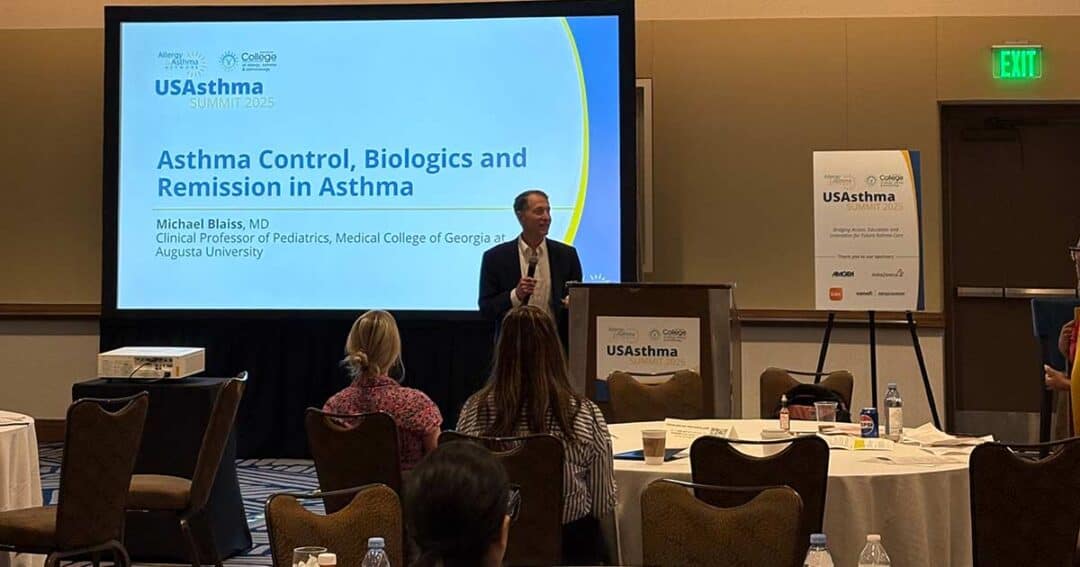
Asthma Control, Biologics and Remission in Asthma, Michael Blaiss, MD, Clinical Professor of Pediatrics, Medical College of Georgia at Augusta University.
Doctors have long talked about asthma control – controlling symptoms, avoiding flare-ups, and maintaining good lung function. But experts are increasingly asking: can asthma truly go into remission?
Dr. Michael Blaiss explained that “remission” means that symptoms go away and stay away for a long time, sometimes without medicine. In cancer or diabetes, remission means the disease is no longer active. But for asthma, the idea is more complex. There is no single, official definition of remission yet. Different groups and studies use different rules.
Doctors have described several types of asthma remission:
- Clinical remission – no asthma symptoms or flare-ups for at least 6-12 months, and normal lung function, with or without treatment.
- Complete remission – all of the above, plus normal airway health.
- Inflammatory remission – inflammation markers in the body return to normal.
Right now, no asthma treatment guarantees complete remission, Dr. Blaiss says. Biologic medicines – advanced injectable drugs that target certain cells in the immune system – can help people with moderate to severe asthma feel much better. Studies show about 20–30% of people on biologics reach what some would call “remission.” However, the results depend on how the word is defined.
Dr. Blaiss emphasized that the term “remission” should be used carefully. Professional medical groups – including ACAAI, American Academy of Allergy, Asthma & Immunology (AAAAI) and the American Thoracic Society (ATS) – have joined together to call for a more unified, validated definition. This would help doctors and researchers compare studies and measure progress more clearly.
Until there is one agreed-upon definition, doctors say asthma remission should be viewed as an “evolving process,” Dr. Blaiss says. It is something to strive for, but not yet fully defined.
Additional Resources
Changes in Federal Support for Asthma: The Impact on Advocacy – Panel Discussion: Elizabeth Elliot, RN; Angela Garcia, PharmD; Matt Reiter – Principal, Capitol Associates. Facilitator: Nissa Shaffi, Director of Advocacy, Allergy and Asthma Network
Nissa Shaffi discussed how shifting federal priorities and funding are impacting people with asthma across the United States. She detailed several major federal policy changes that could reshape healthcare access in the coming years. The polices impact access to care, critical medications, and affordability of healthcare coverage.
New Medicaid work requirements, set to take effect in 2027, may result in as many as 15 million people losing their coverage. Many of these people rely on Medicaid for asthma medications, inhalers, and routine doctor visits. Losing coverage could mean more people skipping treatment and ending up in emergency departments for asthma attacks.
Another concern is the pending expiration of premium subsidies for the Affordable Care Act, which helped make marketplace health plans more affordable. Without congressional action, premiums could rise by as much as 30%, forcing millions to reconsider their coverage.
“If people lose their insurance or can’t afford it,” Shaffi says, “we’ll see a direct impact on asthma control and overall public health.”
Elizabeth Elliott, RN, shared how policy changes could affect children. She warned that fewer students may qualify for medical assistance, leaving schools to fill the gaps. “We may see more uninsured students,” she said, “and school nurses will have to stretch even further to keep kids healthy and in class.”
Dr. Angela Garcia highlighted the growing role of pharmacists in supporting patients. She noted that when people struggle to afford medications, they may cut doses in half or go without refills, which can quickly lead to uncontrolled asthma and emergency department visits.
“The worst part of my day is when a patient tells me, ‘I can’t afford this medication’ Even if it might save their life. And that has to change. No one should have to choose between medicine and paying their bills,” she says.
Matt Reiter, a government relations and policy professional, provided insight into the federal policy landscape, describing a challenging environment marked by partisan gridlock and tight budgets. He noted that programs such as the National Asthma Control Program (NACP), which funds community-based asthma initiatives, could face cuts if Congress cannot agree on appropriations.
Shaffi ended the discussion by urging continued advocacy. “We’re facing big challenges, but there is power in advocating at all levels of government, with progress often made at the local level. Through strong partnerships, education, and persistent advocacy, we can protect access to asthma care,” she says.
Additional Resources


2025 Sponsors
Allergy & Asthma Network is grateful to ACAAI for its support and for providing the meeting space for the USAsthma Summit. We are also grateful to our corporate partners. Sponsorship of the USAsthma Summit helps fund the event as well as the scholarships offered to in-person attendees.