
Omalizumab Treatment for Multiple Food Allergies: The OUtMATCH Trial
Welcome to the Allergy, Asthma & Immunology Innovations podcast. In this episode of The Itch Review series, we highlight research in allergy and immunology. This podcast focuses on how the biologic medication omalizumab (brand name Xolair®) can help people with multiple food allergies.
Omalizumab was FDA-approved in 2024 for the treatment of severe food allergies. It is a medicine that was already used to treat asthma, chronic hives and nasal polyps.
Our hosts, Payel Gupta, MD, and Kortney are once again joined by Michael Blaiss, MD, to review a new study published in The New England Journal of Medicine. The study is called the OUtMATCH trial. It looked at how well omalizumab helps people with peanut, milk, egg, and other food allergies safely tolerate more of those foods.
You can listen to the podcast on ItchPodcast.com or download it for listening anytime, anywhere, at:
This podcast is for informational purposes only and does not substitute professional medical advice. Any mention of brands is also informational and not an endorsement. Always consult with your healthcare provider for any medical questions or concerns.
Thanks to Genentech for sponsoring this episode.
How does omalizumab help with food allergies?
In food allergies, the immune system overreacts to certain foods. This can cause hives, swelling, stomach pain, or even a life-threatening reaction called anaphylaxis.
Omalizumab helps by blocking IgE, a protein in the body that starts allergic reactions. When there is less active IgE, the body may be less likely to react. This can raise the allergy threshold, meaning a person might be able to eat a little more of the food before having a reaction. It doesn’t mean the allergy is gone, but it may help protect against small, accidental exposures.
Omalizumab is not a cure for food allergies. It gives many people the ability to safely come into contact with more of their allergens than they could before taking the medication.
Key takeaways from the OUtMATCH trial podcast episode
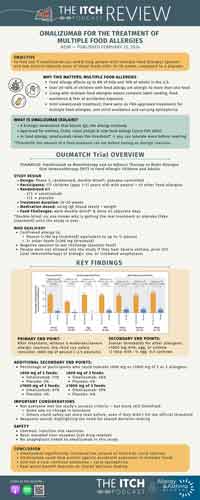
- Omalizumab was tested in children and teens. The trial included kids ages 1 to 17 with peanut and at least two other food allergies.
- Double-blind oral food challenge. Everyone did food challenges before the study to qualify. They did them again after treatment to see if they could eat more of their allergens.
- The goal was to raise the reaction threshold. Researchers wanted to know if kids could safely eat more of a food they were allergic to when taking omalizumab.
- Most kids on omalizumab saw improvements. Many were able to tolerate more food than those who got the placebo.
- Some still reacted to small amounts: Not everyone responded the same. Omalizumab is not a cure for food allergies.
Timestamps for our episode about the OUtMATCH trial
02:00 – How common are food allergies and why this study matters
04:20 – What is omalizumab and how does it work?
07:48 – How the OUtMATCH study was set up
10:42– What does “double-blind” mean in a study?
14:04 – How dosing worked in the trial
15:55 – Who could not join the study and why
18:11 – Who was in the study
20:25 – What the researchers were measuring
22:42 – What the results showed
31:55 – What happened with quality of life scores
34:29 – Side effects and safety of omalizumab
36:30 – What the doctors took away from the study
Food allergy resources
- What are food allergies
- Living with Food Allergies
- Mental Health and Living with Food Allergies
- What is Xolair?
Check out additional podcast episodes about food allergies


