
Allergy & Asthma Network 40th Anniversary: A Legacy of Research
Published: December 3, 2025

Since 1985, patients and caregivers have come to Allergy & Asthma Network for answers to questions about asthma, allergies and related conditions. We listened. These conversations gave us a snapshot of what they needed to manage symptoms, communicate more effectively with doctors, and regain control of their lives.
Allergy & Asthma Network formalized this into early research. Survey results offered insight into patient experiences and real-world evidence. Meetings with patient advisory groups were valuable listening sessions. They provided a snapshot of what patients needed to manage symptoms, access novel treatments, and communicate with their healthcare providers to gain better control of their condition. Patients and caregivers provided their perceptions, opinions, beliefs and attitudes about disease journeys and treatment options.
Allergy & Asthma Network was able to articulate the needs of patients and caregivers in ways that proved influential with doctors, policymakers and industry leaders. Outcomes and conclusions expanded into patient education programs.
Research staff partnered with healthcare professionals and patients to coauthor studies, systematic reviews and meta-analyses of data. These were published in peer-reviewed journals and included with international and national guidelines. We presented the research at industry meetings and medical society conferences.
We also developed and co-authored plain language summaries and educational materials of research studies. These are distributed through multiple channels worldwide.
National survey results have included:
- epinephrine preferences
- eczema health coaching
- biologics access
- parents of children with asthma perceptions of oral steroid use and biologics
- health-seeking behaviors of people with moderate to severe asthma
- cumulative steroid use in people with eczema
- oral and inhaled steroid effects on asthma specific quality of life
- use of topical and systemic corticosteroids for urticaria
- topical steroid withdrawal
- parents’ perceptions of needle immunotherapies
- core outcomes set for clinical trials for people with moderate to severe asthma
- sleep monitoring of people with asthma
- policy statements for albuterol in schools
- data commons for food allergy
- PCORI convening virtual conferences for Black/African American and Hispanic/Latino communities
- shared decision-making app to improve outcomes in people diagnosed with asthma
Our research efforts have influenced the evolving landscape of asthma and allergy care. Through our innovative Trusted Messengers initiative, research revealed how virtual asthma coaching can:
- improve patients’ asthma control;
- reduce asthma-related emergency department visits and hospitalizations; and
- improve patients’ quality of life living with asthma.
New and ongoing research continues to focus on patient and caregiver diversity in research and real-world evidence data.
Patient and caregiver perceptions
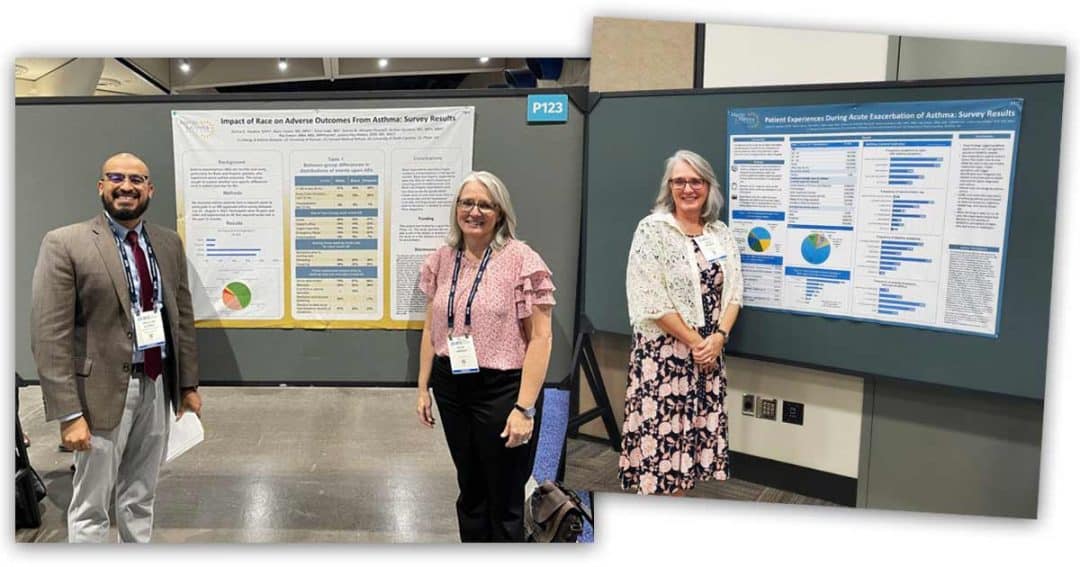
Allergy & Asthma Network often talks with patients and caregivers to learn about their experiences with asthma, allergies, eczema, food allergies, anaphylaxis and chronic urticaria. It has played a role in helping health institutes develop national asthma and food allergy guidelines.
Surveys showed that only one-third of people with moderate to severe asthma use an Asthma Action Plan. Most try to treat symptoms at home and go to urgent care only if they get worse. Many caregivers of children expect to use oral corticosteroids to treat asthma flares and do not know about the side effects. Families using biologics often spend a large part of their income on treatment.
Many people also prefer needle-free options for allergy immunotherapy and for using epinephrine during a severe reaction.
In eczema studies, adults and children shared that they use many kinds of steroids for years. More than 80% said they had symptoms of topical steroid withdrawal. These findings helped guide national education and research.
“The Network’s nasal corticosteroid survey revealed there’s a lot of room for improvement in patient education and safe use of the over-the-counter medications. I’m pleased the American College of Allergy, Asthma & Immunology (ACAAI) accepted this survey for presentation at its 2013 annual scientific meeting.”
– Stanley Fineman, MD, Allergy & Asthma Network Board of Directors and ACAAI past president
Patient groups helped create research guides and virtual conferences for Black and Hispanic/Latino families. Many said they want to join research studies but are not told about them. Food allergy groups asked for education that fits their culture, which led to new community campaigns and support for a coaching program.
People with chronic hives shared that getting a diagnosis can take many years, especially in under-resourced communities. They also explained that hives can look different on darker skin. This led to new education efforts and a skin-of-color image library.
A focus group of teenagers reported what they really thought about asthma and their treatment plans, what problems they faced at school or in sports. Their responses helped to identify areas where parents and healthcare providers could work with them to improve medication compliance.
Asthma Equity Explorer Database
In 2023, Allergy & Asthma Network partnered with the MITRE Corporation to launch the Asthma Equity Explorer™ at AsthmaEquity.org. It’s a free web-based platform designed to disseminate data on asthma prevalence in the United States.
The database helps health professionals, policymakers and researchers see how different factors in a community can affect asthma. It offers many types of publicly available data including federal health, housing and environmental statistics and redlining information.

An interactive map allows users to look up a state, county or neighborhood and explore more than 30 factors related to social determinants of health, such as income, housing problems and air quality. Doctors can find areas with high asthma needs, policymakers can guide new policies, and school nurses can check if their school is in a high-risk area.
Since its launch in 2024, the database has seen significant usage, with 337 unique users from 305 organizations. It has been shared at major public health and medical society conferences and meetings.
NIH BREATHE Study
Allergy & Asthma Network partnered with Blue Marble Health to create an asthma management platform. Patients and healthcare providers provided guidance. The project received funding support through a National Institutes of Health (NIH) Small Business Innovation Research (SBIR) award.
We learned what potential users wanted and developed eight education modules and ways to track surveys and trends. The platform was developed with bilingual content, avatar-led content, and validated surveys.
The research served as the foundation for the Virtual Asthma Coaching Program. It involves a six-week, one-on-one online coaching curriculum led by certified asthma educators. Patients and providers gave the platform high ratings. It promoted patient-centered asthma education and practical management tools.

How research shapes public policy
Allergy & Asthma Network conducted studies to examine whether schools are providing a healthy environment for students with asthma and allergies. It revealed high exposure to unhealthy indoor air and no easy access to lifesaving medication.
This helped ignite the effort to allow students to carry and use their quick-relief albuterol inhalers at school. Our advocacy efforts, including at Allergy & Asthma Day Capitol Hill (AADCH), led to the passage and signing of the ASTHMA Act in 2004.
Later surveys addressed access to epinephrine at school and the risk of severe allergies to food in classrooms and the cafeteria. Again, the results helped Allergy & Asthma Network advocate for school anaphylaxis and stock epinephrine policies.
How many asthma patients can tell how many doses were left in their inhaler? Answers to our survey included “not many” and “I don’t know.” These answers were passed on to the U.S. Food and Drug Administration (FDA) and drug companies. They approved built-in dose counters. Today, almost all inhalers include them.
Patient-Focused Drug Development (PFDD) Meetings
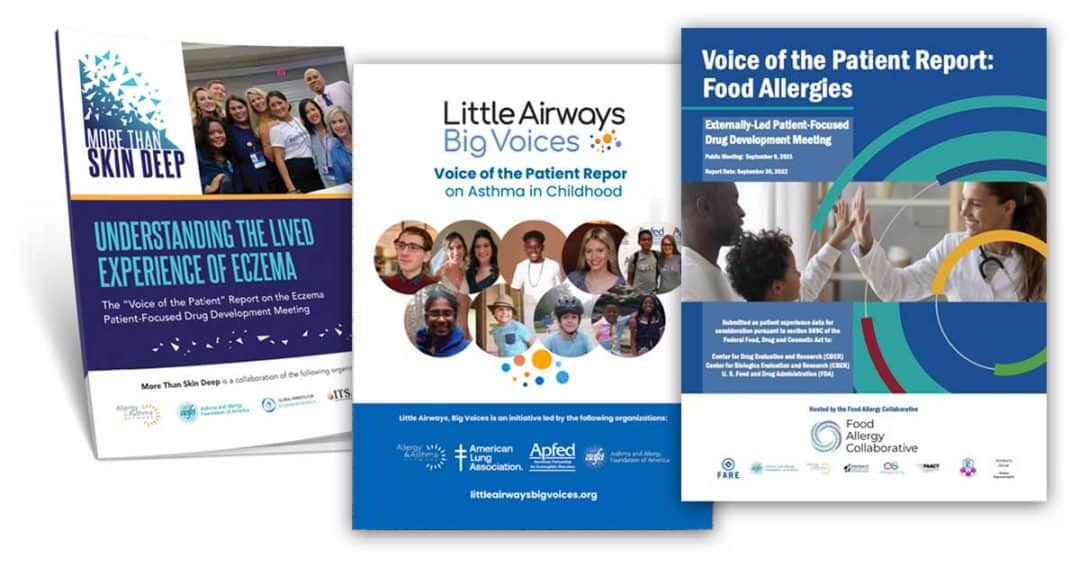
Allergy & Asthma Network collaborated with FDA and other patient advocacy groups to organize three PFDD meetings: eczema (2019), childhood asthma (2021) and food allergy (2021). Patient-focused drug development meetings allow FDA to hear directly from patients about their experiences and needs for future drug development in asthma and allergy care nationwide.
After each meeting, advocacy groups prepared a “Voice of the Patient” report and presented it to FDA. The reports summarized patient perspectives in the asthma and allergy community. They helped guide FDA in evaluating new treatments and making drug development more patient-centered.
Our research legacy continues to grow
Allergy & Asthma Network’s commitment to patient-centered care and research has never been stronger. Our history shows that meaningful change happens when patients help guide the research that affects their lives.
The research mission area continues to grow, with new opportunities for patient advisory groups, national surveys and real-world studies. Our goal is clear: to ensure every patient’s voice shapes the science, the solutions, positive health outcomes, and the future of asthma and allergy care.


