
Early Introduction of Allergens Linked to Drop in Food Allergies
Published: October 23, 2025 Revised: January 6th, 2026

A major shift in how parents feed their babies is showing promising results. A new study shows that giving babies peanut and other allergenic foods early in life can help prevent food allergies. The findings built on years of research that changed long-standing advice, transforming how doctors and families prevent and manage food allergies.
For many years, parents were advised not to give their infants foods that contain peanut. Then, in 2015, the Learning Early About Peanut (LEAP) study was published. This led to the development of new guidelines from the National Institute of Allergy and Infectious Diseases (NIAID) – the Addendum Guidelines for the Prevention of Peanut Allergy in the United States, released in 2017. These NIAID guidelines recommended parents give babies developmentally appropriate peanut products early in life to reduce the risk of peanut allergy.
This has proven to be a game-changer in food allergy prevention. A study published in the October 20, 2025, issue of Pediatrics showed decreased rates of peanut allergy and other food allergies since the recommendations that followed the LEAP study and the NIAID guidelines.
The new study was done by researchers at Children’s Hospital of Philadelphia (CHOP). It found that peanut allergies dropped from 0.79% to 0.45% since the 2017 NIAID guidelines. All food allergies decreased from 1.46% to 0.93%.
Researchers at CHOP also estimated that early exposure to food allergens prevented about 1 in 200 babies from developing a food allergy.
“This decline is both reassuring and encouraging,” says pediatric allergist Michael Pistiner, MD, MMSc, Director of Food Allergy Advocacy, Education and Prevention at the Food Allergy Center at Mass General Brigham for Children in Boston.
“Overall, early introduction, rather than delay, is now the recommended approach for all infants,” Dr. Pistiner adds.
In 2021, the U.S. Department of Agriculture (USDA) updated its national Dietary Guidelines to include specific recommendations for infants. These included the recommendations for the NIAID’s Addendum Guidelines for the Prevention of Peanut Allergy in the United States. The USDA guidelines also encouraged early introduction of other food allergens to infants and young children.
What is early introduction of food allergens?
Early introduction means giving a baby age-appropriate foods early in life to help reduce the risk of developing food allergies.
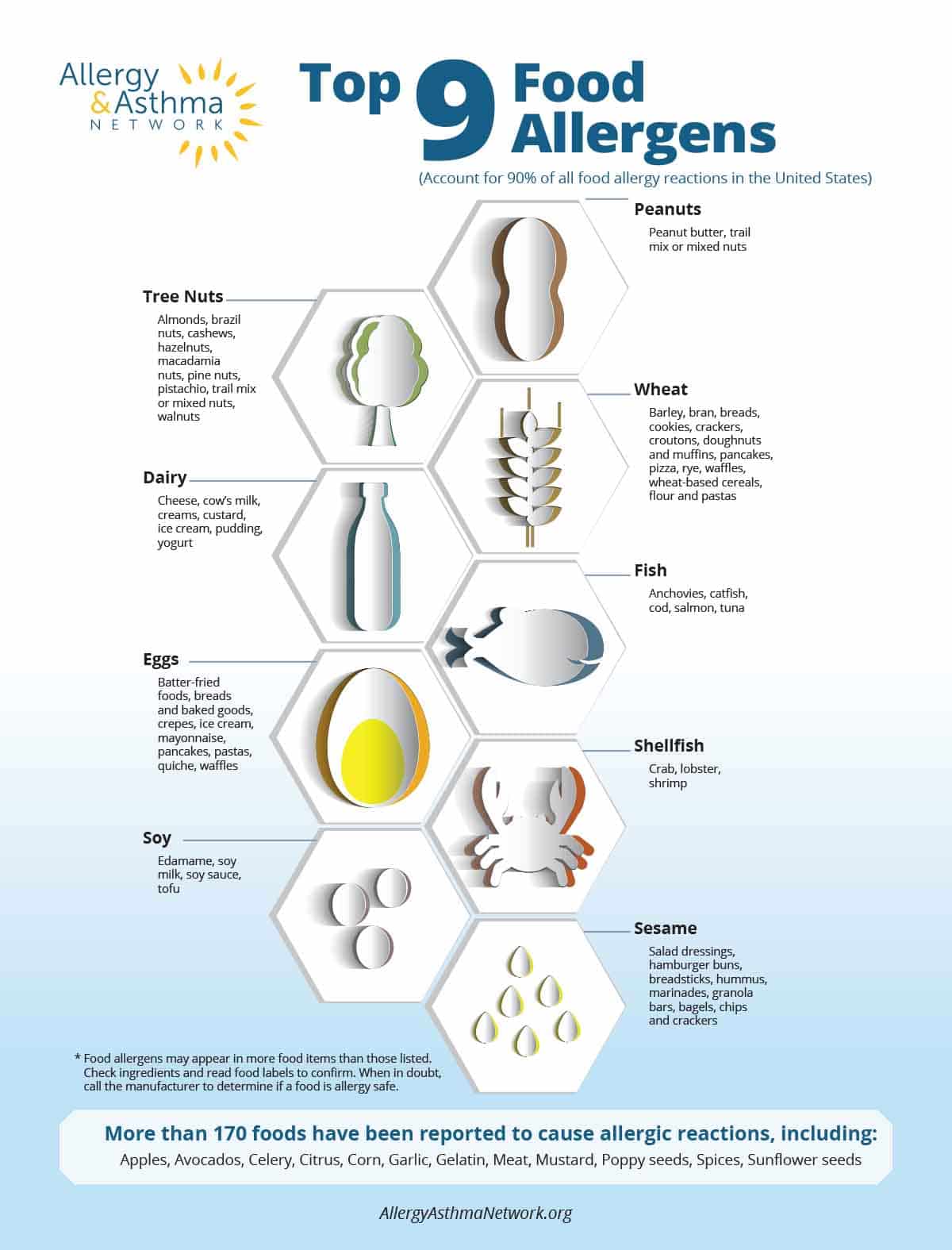
Early introduction typically begins when a baby is 4 to 6 months old. This is when babies start eating solid foods. Foods such as peanut or tree nut products, eggs, and milk can be added slowly and safely to the baby’s diet at this time.
(Important: Never give whole peanuts or tree nut to a child under age 5 – these can cause choking. Using smoothed out nut butters, baby peanut puffs, or other developmentally appropriate forms are best for these ages.)
Studies show that when babies eat these foods early and regularly, their bodies learn to accept them instead of reacting to them. This can lower the risk of food allergies later in life.
What do the 2017 NIAID guidelines recommend for children at risk for peanut allergy and other food allergies?
The National Institutes of Health provided guidance on when and how to introduce peanut to infants, especially for children at risk for peanut allergy. Recommendations vary based on a child’s risk level – from severe eczema or egg allergy to no known risk.
The implementation of the NIH guidelines proved to be challenging. In 2021, the American College of Allergy, Asthma & Immunology (ACAAI), American Academy of Allergy, Asthma & Immunology (AAAAI) and the Canadian Society of Allergy and Clinical Immunology (CSACI) released consensus guidelines. The Consensus Approach to the Primary Prevention of Food Allergy Through Nutrition also advised introducing peanut products, egg and other allergens to babies around 6 months of age but not before 4 months. It de-emphasized the need for testing and pre-screening, regardless of eczema status.

American Academy of Pediatrics (AAP) podcast: Edith Bracho-Sanchez interviews Michael Pistiner, MD. Listen now!
What do parents need to know about early introduction of food allergens?
“Parents should know that introducing common allergens (including peanut, egg, cow’s milk, and others) to infants at 4-6 months of age can reduce the risk of developing those food allergies,” Dr. Pistiner says. “For the vast majority of infants, this can be done safely at home without prior testing. Families should then keep these foods in the infant’s diet routinely.”
Targeting the 4-6 month window for early introduction is especially important for babies at high risk for food allergies. These are children who have severe eczema or an already established food allergy. “Early discussion with the child’s primary care clinician can help facilitate shared decision-making and ensure that peanut and other allergenic foods are introduced without delay,” Dr. Pistiner adds.
Reviewed by:
Michael Pistiner, MD, is a pediatric allergist and the Director of Food Allergy Advocacy, Education, and Prevention at Mass General Brigham for Children, Harvard Medical School, Boston. He specializes in food allergy and anaphylaxis prevention and management in infants and toddlers. Dr. Pistiner’s team has proposed modified criteria for identifying anaphylaxis in young children and developed the Food Allergy Management Prevention Clinician Support Tool for Infants and Toddlers (FAMP-IT.org) to help primary care providers prevent and manage food allergies in this age group. Dr. Pistiner is a member of the American Academy of Pediatrics Section on Allergy and Immunology, the American Academy of Allergy, Asthma & Immunology, and Chair of the American College of Allergy, Asthma & Immunology Anaphylaxis Committee.


