Food Allergy Awareness Week
Published: April 17, 2026 Revised: September 28th, 2026
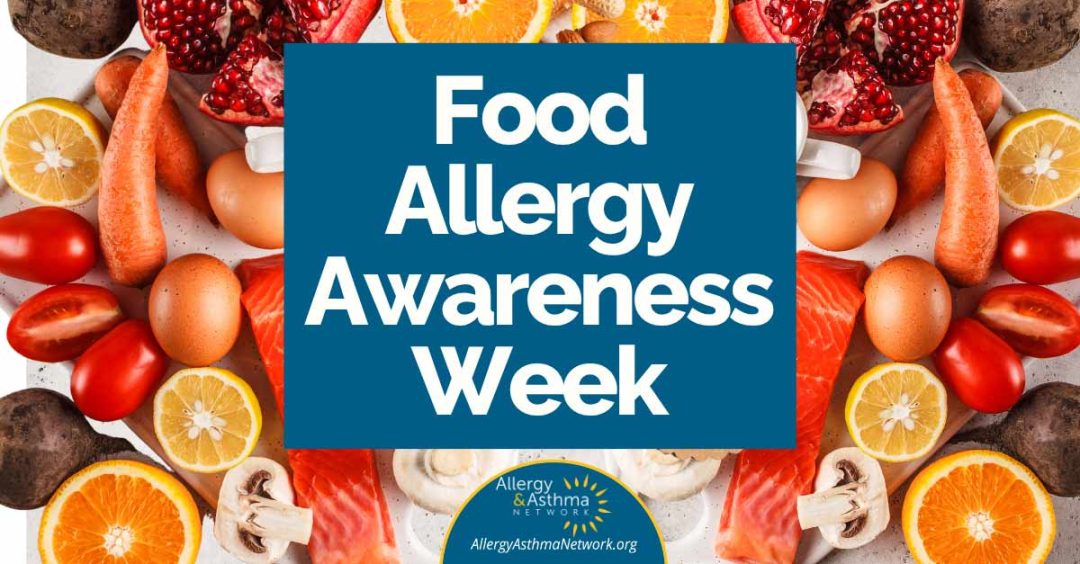
Food Allergy Awareness Week is dedicated to raising awareness, sharing support, and taking action for the approximately 20 million people living with food allergies.
Join Allergy & Asthma Network May 10 – 16, 2026, for Food Allergy Awareness Week (FAAW)!
Whether you live with food allergies or support someone who is, here are 11 impactful ways you can get more involved:
1. Tell your story
Share your experiences living with food allergies on social media. Use the hashtag #FAAW – and tag us @AllergyAsthmaHQ.You can also be part of our “Every Breath Has a Story” campaign by recording and submitting a short video about your experience as a patient, caregiver, or advocate. Your voice can help reduce stigma, raise awareness, and remind others they are not alone.
2. Become a food allergy patient expert
Take this time to boost your knowledge and learn all you can about food allergies! Get detailed info on symptoms, diagnosis, prevention and treatment of food allergies. You can learn about the different types of food allergies and how they can affect people differently.Download our FREE Food Allergy Toolkit for more information and advice.
3. Learn to recognize anaphylaxis in infants
Symptoms of a severe allergic reaction can look different in infants and toddlers. Recognizing these symptoms early can save a life. Download our Infant Anaphylaxis Symptoms Recognition Guide to learn: • How symptoms may appear differently in babies• Early warning signs caregivers might miss• When and how to act quickly with epinephrineShare this resource to help ensure everyone gets the care they need fast and safely. ¡También en español!
4. Be prepared: Epi First. Epi Fast
Learn how to properly use epinephrine — either an epinephrine auto-injector or nasal spray. It can save a life during a severe allergic reaction that requires timely treatment with epinephrine. Share this lifesaving info with your friends and family.
5. Go viral
Use our May Awareness Month Toolkit to find shareable graphics and images for social media related to Food Allergy Awareness Week.
6. Learn on the go with Food Allergy Podcasts
Listen in on our Food Allergy Podcasts in collaboration with The Itch Podcast. These 30-40 minute podcasts feature both patient expert insights. Topics include:
- Management and Treatment Options
- Managing Food Allergies at Different Life Stages
- School Safety for Families and School Safety for School Nurses
- Telehealth for Food Allergies
- Food Allergy Label Reading
- Food Allergies and it’s Impact on the Hispanic/Latino Community and on the African American Community
- And more! Listen anytime on your favorite podcast listening platform!
7. Watch a Replay of the Infant and Toddler Food Allergy Management webinar
‘Critical Collaborations in Infant and Toddler Food Allergy Management’ webinar aired on June 16, 2026. Led by pediatric allergist Michael Pistiner, MD, the webinar will keep you up to date on the latest in food allergy care in young children.
8. Share resources
Learn about food insecurity and why it is more common in people with food allergies. Food insecurity can make it harder for families to access safe, affordable foods. Find out about nationwide and local food pantries, food banks and other nutrition assistance resources. Make sure to share the information in your community.
9. Report Food Labeling Issues
Incorrect or unclear food labels can put lives at risk. If you spot a labeling issue:• Report packaged foods to the FDA and meat products, egg products out of shells, and raw fruits and vegetables to the USDA.
- Include details like product name, brand, and where you bought it from.
- Report issues even if no severe reaction occurred.
- You can also contact your Local Health Department if you have an allergic reaction from a food that you believe is mislabeled on a restaurant menu.
Taking a few minutes to report a problem can help prevent future allergic reactions, improve food safety, and possibly save a life!
10. Stay Informed on Food Allergy Prevention.
Updated guidance from the USDA is helping shape how food allergies can be prevented, specifically in young children. Check out the latest 2025-2030 Dietary Guidelines for Americans. Learn more about USDA Food Allergy Introduction Guidelines.
11. Support Allergy & Asthma Network
Show your support for asthma and allergy outreach, education, advocacy and research by making a donation, becoming an advocate, or volunteering your time. Help us continue our mission to educate, empower, advocate, and support the community.
Make sure to keep sharing, advocating and raising awareness for people living with asthma, allergies, and related conditions. Check out “15 Ways to Celebrate Asthma and Allergy Awareness Month” to find more ways to celebrate all month long.
We appreciate you celebrating and raising awareness for Food Allergy Awareness Week!