
How to Report Food Label Issues for Food Allergies
Published: February 6, 2026

If you or a loved one live with a food allergy, then you know the importance of reading food labels. Food labels identify the ingredients in your food. They also highlight if common allergens are present.
What can you do if you have a severe allergic reaction to a food you thought was “safe” based upon the label?
First, do not continue to eat the food. Then, follow your Food Allergy and Anaphylaxis Emergency Care Plan and administer treatment as needed. Give epinephrine right away if the reaction is severe. When food allergy symptoms are under control, follow up with your allergist.
When you’re feeling better, you can contact one of two federal government agencies to report the food label issue:
- U.S. Food and Drug Administration (FDA) for most food label issues
- U.S. Department of Agriculture (USDA) for meat products, egg products out of shells, and raw fruits and vegetables
Here is what you need to know about reporting an unexpected food allergy reaction due to an inaccurate or misleading food label.
How are allergens labeled on food products?
Before considering how to report allergic reactions to food, it is important to understand how food labeling works. The Food Allergen Labeling and Consumer Protection Act (FALCPA) was passed in 2004. It requires that food labels include the presence of a “major food allergen.” FALCPA identified nine major foods that are responsible for 90% of food allergies. These foods are:
- Milk (cow’s milk, goat milk)
- Eggs
- Fish
- Crustacean shellfish (crab, lobster, shrimp)
- Tree nuts
- Peanuts
- Wheat
- Sesame
- Soy
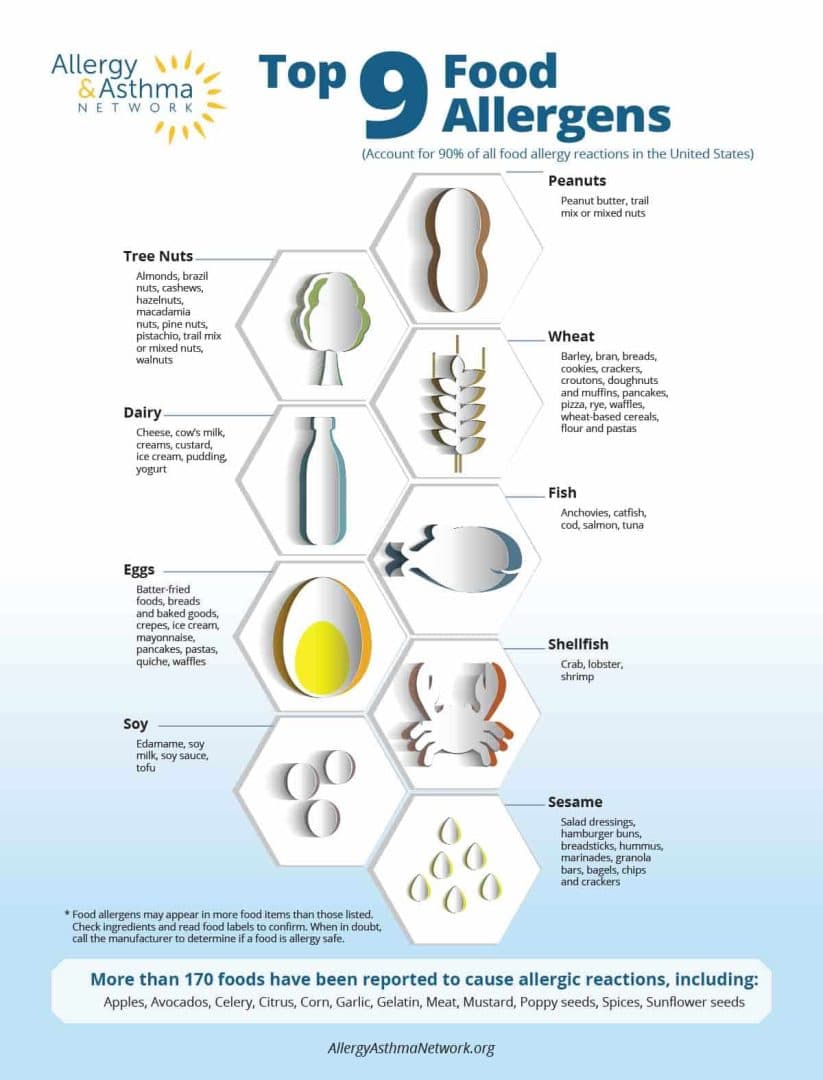
In 2023, a new law went into effect making sesame the ninth major food allergen in the United States. This was based on the Food Allergy Safety, Treatment, Education, and Research (FASTER) Act of 2021. The legislation required foods containing sesame to be labeled with that allergen.
Food labels must identify if the ingredients contain a protein from one of these allergens. They can do this in two different ways. The first is to include the name of the allergen in parentheses when the name of the allergen is not included in the ingredients. An example of this is: “whey (milk).”
The other way allergens may be labeled is by including a list of what is contained in the ingredient list. This must be in the same type size or larger immediately following the list of ingredients. An example of this is: “CONTAINS: wheat, milk, soy.” It may include a precautionary allergen label (PAL). This explains the product was “processed in a facility” or “made on shared equipment” that, for example, also uses peanuts. If you eat food with a PAL for peanut, you may be at risk for severe symptoms if you have a peanut allergy.
If you have an allergy to a food not on the list of nine major allergens, you must be extra vigilant when reading labels. It is important to recognize ingredients containing your allergen.
How do you report a food product mislabeled for food allergies?
Reporting food allergy reactions due to mislabeling can help protect public health and prevent future reactions. When problems with food products are reported to the FDA or the USDA, it can lead to clearer labeling, product recalls, and safer food practices. This is why it’s important to report food allergy labeling problems even if your reaction is not severe.
The FDA is responsible for regulating and labeling most packaged foods. If you have a food allergy and experience a reaction to a food product that is not clearly labeled, you can report it to the FDA.
The USDA oversees foods such as meat (beef, pork, lamb, and poultry), egg products out of shells, and some raw fruits and vegetables. These products carry a USDA label.
Reports can be made by patients, parents, caregivers or healthcare professionals, even if emergency care was not needed. When reporting, include as much detail as possible, such as the product brand and manufacturer, package size and type, lot or date codes, where it was purchased, and the date of purchase.
Food and Drug Administration
The FDA ensures foods are sanitary and properly labeled with a “Nutrition Facts” statement on each product. Most food products fall under the FDA. Foods that the agency regulates include:
- packaged foods
- dairy products
- processed fruits and vegetables
- most seafood
- food additives and spices
The FDA also covers dietary supplements and cosmetics.
Let’s say you have a cow’s milk allergy, so you drink almond milk. If you experience an allergic reaction to the almond milk, double check the label to make sure it doesn’t also contain cow’s milk. If it says it does not contain cow’s milk, and you’re not allergic to any other ingredients, then you can report the reaction to the FDA Human Foods Program. Here’s how:
- To report reactions from food and dietary supplements, fill out and submit a report using the FDA’s Safety Reporting Portal.
- To report reactions from cosmetic products or cannabinoid hemp products (which may contain food ingredients), fill out and submit an online report using the FDA’s MedWatch Online Voluntary Reporting Form.
- You may also call the FDA Food and Cosmetic Information Center: 888-SAFEFOOD (888-723-3366).
The FDA has a food and drug reporting guide you can use if you have a complaint about a product regulated by the FDA. It explains what happens after you make a report.
Do not throw out the product or its packaging as the FDA may want it for testing. If you have extra packages of the product, keep those as well. You may not hear back from the FDA about their investigation. You may want to keep an extra sample of the product to send out for testing on your own.
U.S. Department of Agriculture
The USDA supports food safety and education efforts with meat, poultry and egg products. The agency works alongside the FDA to promote proper food handling and allergen awareness.
While the FDA regulates food labeling, the USDA plays a critical role in nutrition policy and ensuring safe access to meals for people with food allergies. This includes children in school and childcare settings.
You can report a food safety issue to the USDA. Here’s how to report a food allergy concern to USDA:
- Call the USDA Meat and Poultry Hotline: 888-MPHotline (888-674-6854).
- You may also fill out an online report: USDA Electronic Consumer Complaint Form.
Keep the original container or packaging and any uneaten portion of the meat, poultry or egg product. Refrigerate or freeze it, if necessary. You may need to send it to the USDA for testing. You should also make note of the brand name, manufacturer of the product, size and package type, can or package codes and dates, the name and location of the store, and the date you purchased the product.
State or local agencies
There may be times when someone has an allergic reaction to a food not regulated by the FDA or the USDA. This may happen with fresh fruits and vegetables, retail establishments, restaurants, bakeries, local grocers, markets, or any place they package their own foods ready to serve.
In this case, to report a food allergy concern, contact your local health department or state department of agriculture.
Can I report a restaurant if the menu is mislabeled for food allergies?
Yes. You can contact your local health department if you have an allergic reaction from a food that you believe is mislabeled on a restaurant menu. (You may want to check with the restaurant first. The allergen could have gotten into food through cross contamination.)
Federal law does not require restaurants, delis, bakeries or coffee shops to label food allergens on menus. However, many do so voluntarily. The FDA’s Food Code includes guidance urging food establishments to include allergen information on menus. In addition, some states are enacting laws that require allergen information to be posted on the menu or in the facility.
When contacting your local health department, be sure to include the date you attended the restaurant, what you ordered, and details of your allergic reaction. You may want to take photos of the dish and the menu.
You can contact the FDA or the USDA (using the same reporting processes as above) if a food establishment gave you a product that has mislabeled packaging.

How can I have a product tested for an allergen?
If you are concerned about not hearing back from the FDA about your report, you can have the product independently tested. The Food Allergy Research and Resource Program (FARRP) is an organization that can perform analysis of products. FARRP has a process to test a product for various allergens and report back to you. Results are confidential.
They do charge for this service (a discount is offered for FARRP members). To have a food sample tested, FARRP requests you send at least 100 grams of the product for testing. You can start a Sample Analysis Request on FAARP’s website.
The important thing to remember is that FAARP is testing for the presence of a specific allergen. If you are allergic to peanuts and think a product you ate might have contained peanuts, you should request a peanut test. Check out how their testing services work.
What do I do if testing reveals my allergen was present?
First, do not continue to eat the food. Wait until you confirm that the allergen is not present in the product any longer. Contact the food manufacturer for further information.
Search grocery stores or online for similar products with allergen-safe ingredients. Be sure to also check favorite recipes and find safe food substitutions for allergens.
If the product was mislabeled, you can report this to the FDA, the USDA or other health agency. Reminder: don’t throw out the food product and package. You may need to send them to the government agency.
What do I do if testing reveals my allergen was NOT present?
If you sent a food product for allergen testing and the report found that your allergen was not present, make an appointment with your allergist. You may have uncovered or developed a new allergy. It is important to identify it.
It may help your allergist if you bring a list of ingredients of the food product when you go to your appointment. Through allergy testing and reviewing the list of ingredients, you and your allergist may be able to identify your specific food allergen.
Reviewed by:
William E. Berger, MD, FACAAI, is a board-certified allergist and immunologist who serves as a media spokesperson and Chair of the Medical Advisory Council for Allergy & Asthma Network. He is a Distinguished Fellow and Past President (2002-03) of the American College of Allergy, Asthma & Immunology (ACAAI).


